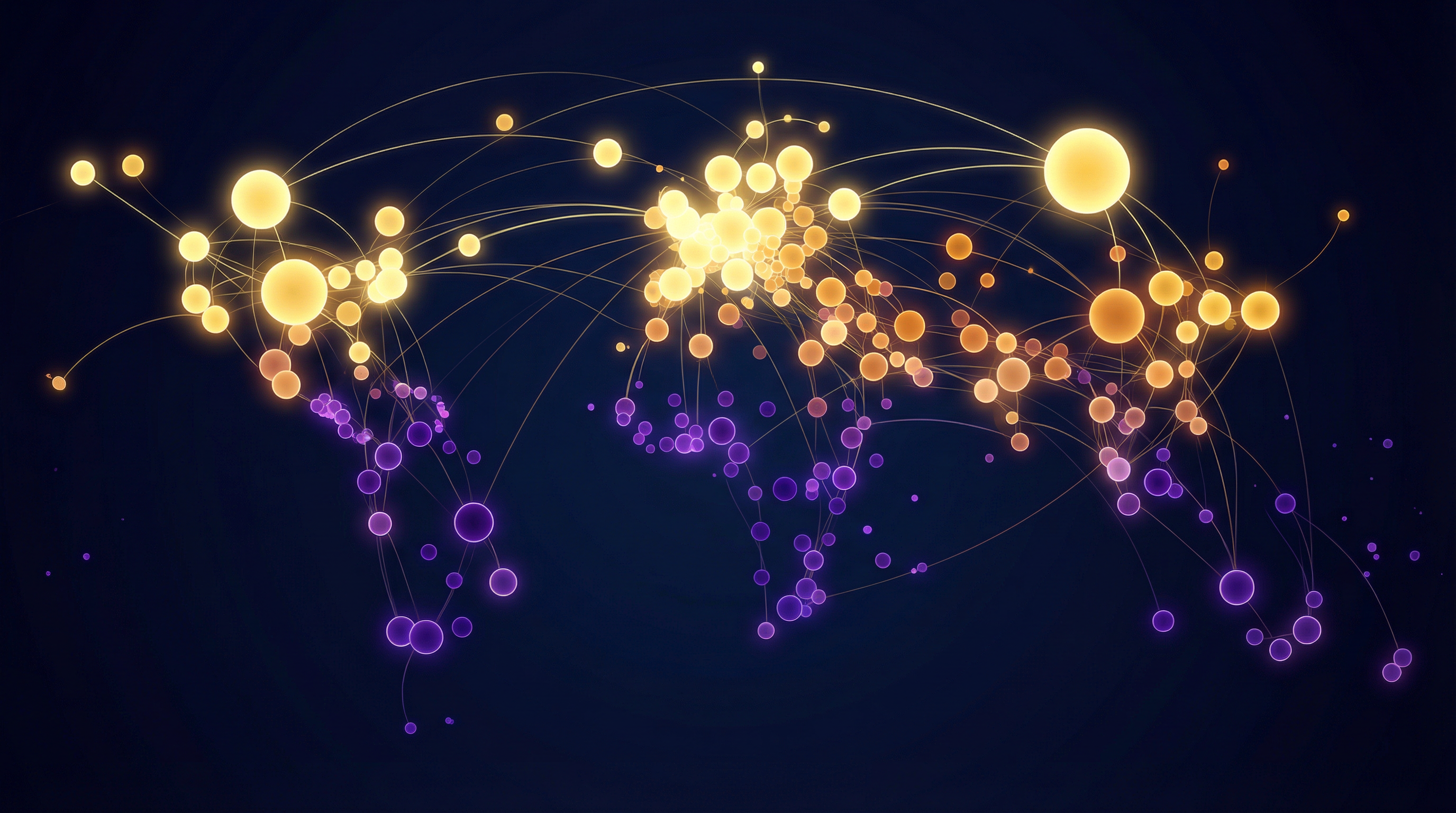
Nature Conservation Zones: One Million km² Threatened by Lack of Coordination
| :--- | |
|---|---|
| Cattle ranching | 2,110,000 |
| Oil crops (palm, soy) | 950,609 |
| Logging | 678,744 |
| Cereals (excluding rice and wheat) | 445,902 |
| Vegetables, fruits, nuts | 379,251 |
Source: Our World in Data, data for the period 2010-2014 [7]
From 295,000 Protected Areas to the 30x30 Goal: Where Does the Global Network Stand?
The concept of protected areas is not new. While forms of nature protection have existed since antiquity, the modern movement truly took off in the 19th century. The creation of Yellowstone National Park in the United States in 1872 is often cited as the founding act, but it was part of a broader movement that saw the emergence of protected areas in Australia, New Zealand, and South Africa around the same time [9]. Since then, the global network of protected areas has continued to grow. The World Database on Protected Areas (WDPA), managed by UNEP-WCMC and IUCN, currently lists over 295,000 protected areas covering 16.6% of land and 8.2% of oceans [2].
In December 2022, the adoption of the Kunming-Montreal Global Biodiversity Framework marked a decisive step, with the flagship goal of protecting 30% of land and seas by 2030 (the "30x30" target). The Protected Planet Report 2024 indicates that we are still far from achieving this goal [3]. Reaching the 30x30 target in six years represents a colossal challenge, requiring the addition of millions of square kilometers to the global network. The study by Brock et al. highlights that without drastic coordination, a significant portion of the areas slated for protection risks being sacrificed to development.
Recent history shows that the speed of designation of new protected areas has accelerated. Between 2010 and 2020, protected land cover increased from 12.7% to 16.6%. However, this quantitative acceleration says nothing about the quality of protection. Several studies have shown that degradation within protected areas is progressing in many regions, particularly in Southeast Asia and Central Africa, where monitoring and enforcement means remain insufficient.
27% of Marine Protected Areas Could Be "Paper Parks" Without Real Management
The study by Brock et al. provides a powerful framework, but its implementation faces considerable obstacles. The figure of one million km² threatened is an estimate based on models and demand projections for 2050. The reality on the ground will depend on national policies, economic dynamics, and societal choices. Furthermore, the mere designation of an area as "protected" does not guarantee its effectiveness. A 2023 study revealed that 27% of marine protected areas could be "paper parks," meaning areas protected on paper but without real management or enforcement on the ground [10]. These parks fail to achieve their conservation objectives and represent a failure of protection efforts.
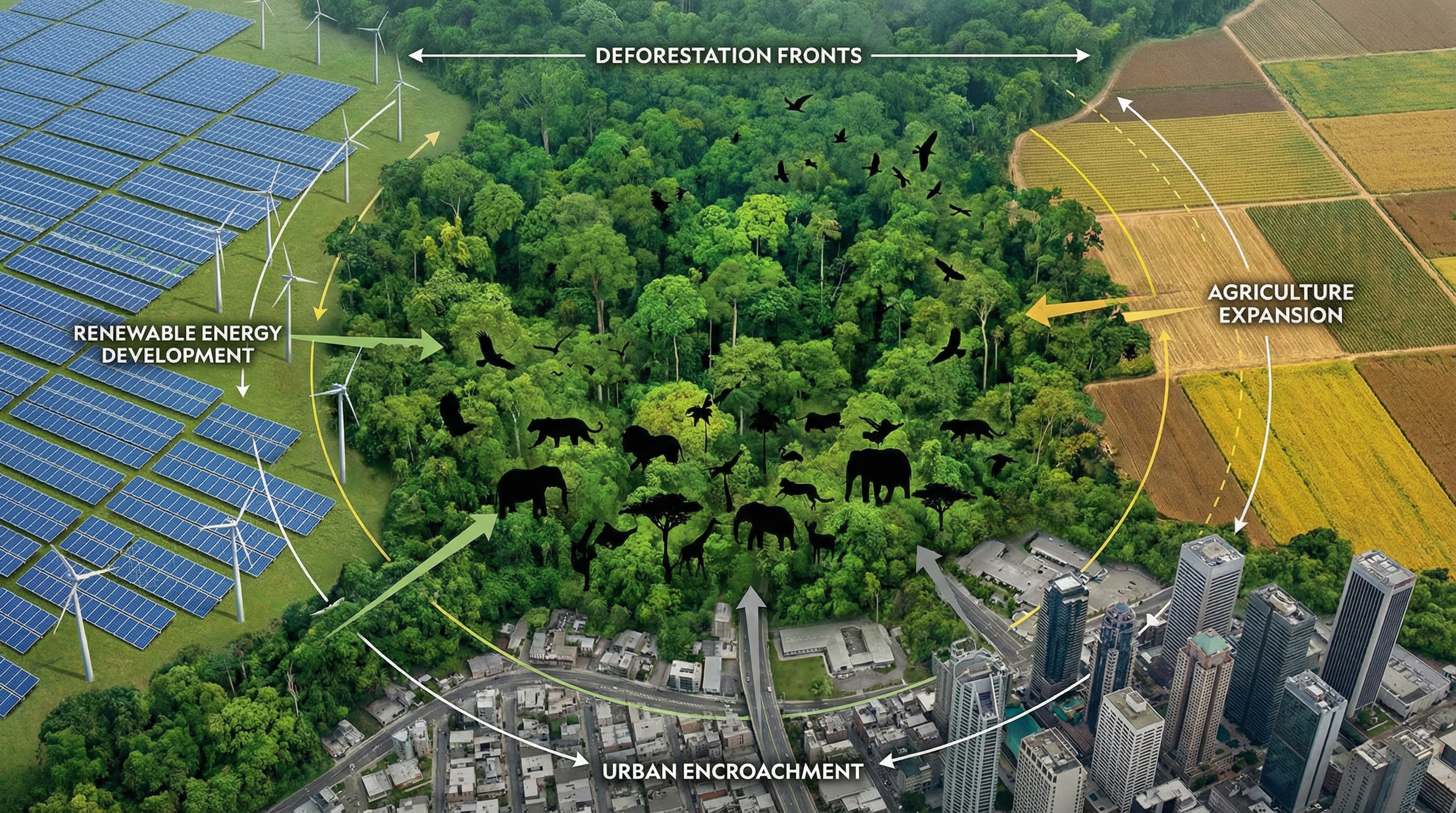
The "green versus green" conflict is a significant nuance. The Vineyard Wind offshore wind project, off the coast of Massachusetts, illustrates this dilemma. Approved for its contribution to clean energy, it has drawn opposition from conservation groups due to its potential impacts on North Atlantic right whales, a critically endangered species [8]. Similarly, in California, the development of large solar power plants in the Mojave Desert threatens the habitat of the desert tortoise, a protected species. In the North Sea, offshore wind farms conflict with the migratory routes of millions of seabirds. These examples show that the energy transition, even if "green," is not without its ecological costs.
Another important limitation is the issue of the rights of indigenous peoples and local communities. Historically, the creation of protected areas has often come at the expense of these populations, displacing them from their ancestral lands. The case of the Batwa in Uganda, driven from Bwindi Forest to create a national park for mountain gorillas, remains emblematic of this "fortress conservation." The Kunming-Montreal Agreement emphasizes an equitable approach that respects rights, but putting it into practice remains a major challenge. Indigenous peoples manage about 25% of the Earth's land surface, and data shows that indigenous territories often exhibit biodiversity equal to or greater than that of formal protected areas. Conservation cannot succeed if it is perceived as a threat by those who live closest to nature.
Financing constitutes a structural bottleneck. The biodiversity financing gap is estimated to be between $598 billion and $824 billion per year. Traditional financing mechanisms—government grants and philanthropic donations—cover less than 20% of the needs. New approaches, such as green bonds, payments for ecosystem services, biodiversity credits, and impact investments, are needed to mobilize private capital on a large scale [11]. The Fund for the Global Biodiversity Framework, established in 2023, has received commitments of $20 billion per year from developed countries—a sum still far below the needs.
Finally, the proposed framework focuses on land allocation but does not address the fundamental issue of demand reduction. Reducing pressure on ecosystems requires action on the drivers of deforestation and land conversion, particularly by changing our food consumption and production patterns. Regenerative agriculture, reducing food waste (which accounts for one-third of global production), and shifting dietary patterns towards less meat could free up hundreds of millions of hectares.
A Tool to Mediate Land Use Conflicts Before They Erupt
The most direct implication of this study is that it provides policymakers with a quantifiable tool to mediate land use conflicts. By translating a governance problem into numerical data, it makes the cost of inaction tangible. The message is clear: coordination is not an option, but a necessity to reconcile development and conservation. The difference between a scenario of widespread conflict and a scenario of sustainable development lies in the political will to implement integrated planning mechanisms.
Concretely, this means creating dialogue platforms between the ministries of environment, agriculture, energy, and economy. It involves integrating the value of biodiversity and ecosystem services into investment decisions. Initiatives like the Intergovernmental Science-Policy Platform on Biodiversity and Ecosystem Services (IPBES) are already working to develop metrics and tools for this [4]. Countries like Costa Rica, which has succeeded in doubling its forest cover in thirty years while developing its economy, show that reconciliation is possible at the national level.
Technical solutions are also emerging. Agrivoltaics—the combination of solar panels and agricultural crops on the same plots—allows for energy production without sacrificing agricultural land or natural spaces. In France, initial results show that certain crops (vines, berries, aromatic plants) even benefit from the partial shade of the panels. Floating solar on reservoirs and artificial water bodies offers another way to reduce land competition.
In the longer term, this approach paves the way for a more integrated vision of land-use planning, where conservation is no longer a constraint but an essential component of resilient and sustainable development. By identifying potential conflict zones before they become actual conflicts, it becomes possible to direct investments towards areas with lower ecological impact and promote innovative solutions. The challenge is immense, but research shows that a future where human prosperity does not come at the expense of nature is not only possible but also quantifiable.
---
Sources
- Balancing land use for conservation, agriculture, and renewable energy.
- https://www.protectedplanet.net/en/thematic-areas/wdpa
- https://www.unep.org/resources/report/protected-planet-report-2024
- https://iucn.org/news/202602/ipbes-business-and-biodiversity-report-highlights-collaboration-needed-contribute
- https://www.iea.org/reports/land-use-competition-between-biodiversity-and-net-zero-goals
- https://www.fao.org/newsroom/detail/cop26-agricultural-expansion-drives-almost-90-percent-of-global-deforestation/en
- https://ourworldindata.org/grapher/deforestation-by-commodity
- https://blogs.nicholas.duke.edu/env212/green-vs-green-conflict-between-renewable-energy-and-biodiversity-loss-chloe-brenner/
- https://iucn.org/sites/default/files/import/downloads/history_wcpa_15july_web_version_1.pdf
- The 'Paper Park Index': Evaluating Marine Protected Area effectiveness
- https://www.conservationfinancealliance.org/cfa-white-paper