In Chile, a Social Impact Bond Reduced Illiteracy from 90% to 40% in One Year
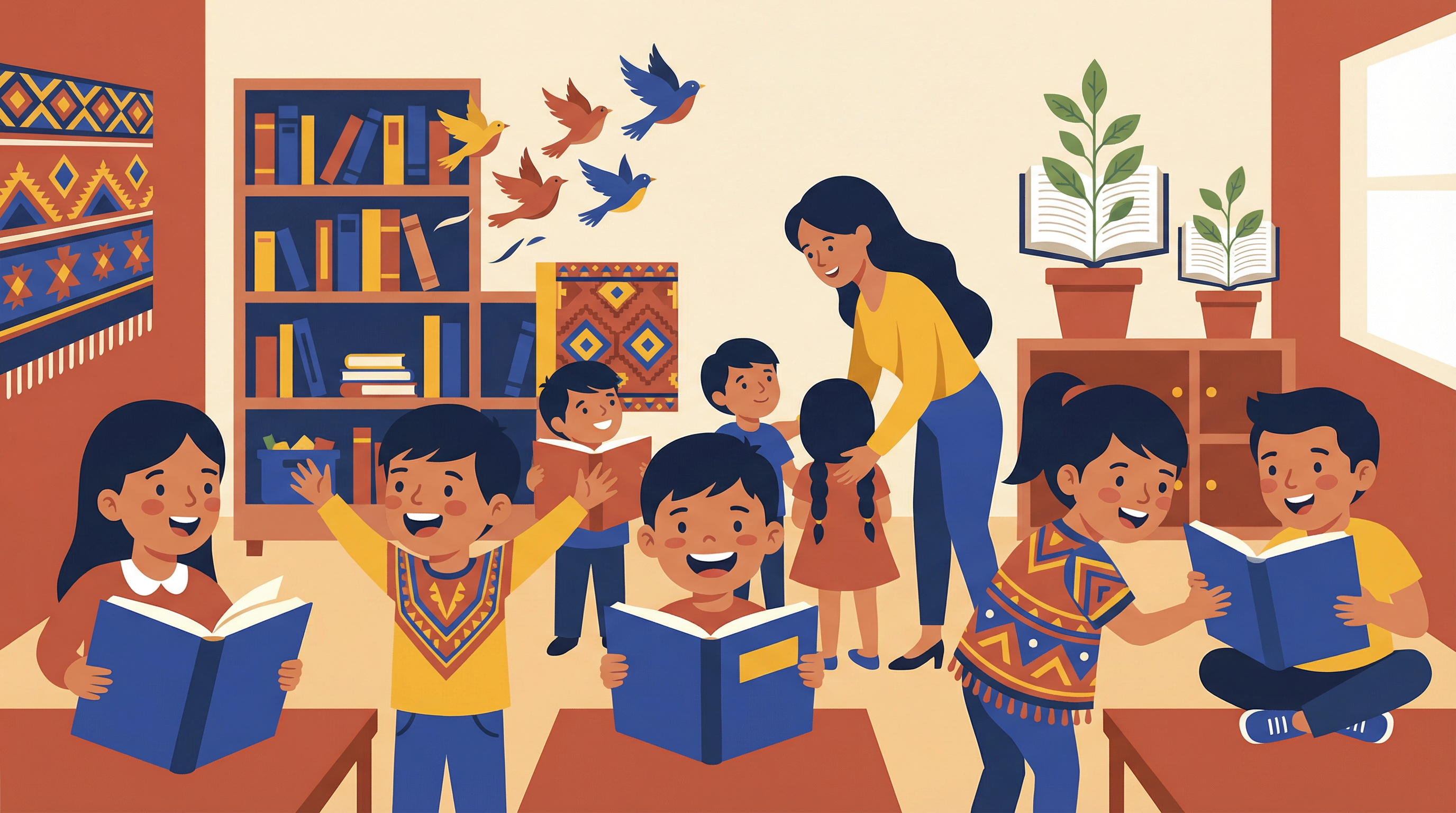
In 2023, in the municipality of Puente Alto, a suburb of Santiago, Chile, 2,700 first-graders from vulnerable communities could not read. Over 90% of them were classified as "non-readers" by the standardized DIALECT test. One year later, this proportion had dropped to 40%. The mechanism that made this result possible is neither a school reform nor a classic government program. It is a Social Impact Bond (SIB), a contract where private investors finance an intervention, and the government only repays if the results are achieved.
$560,000 Raised from 50 Private Investors
The first Chilean SIB, documented by a case study from Columbia University published in August 2025, relies on a precise financial architecture. The investment fund Larraín Vial Education Impact raised 546 million Chilean pesos (approximately $560,000) from over 50 private investors. These funds were disbursed to a consortium of educational providers: Aptus, in partnership with Letra Libre, Fundación Astoreca, Fundación Crecer con Todos, and Fundación Educacional Barnechea. The contract management was entrusted to Corporación Bien Público. [1]
The outcome funders included the municipality of Puente Alto, Falabella Retail S.A. (Latin America's largest retailer), Fundación Angelini, Fundación San Carlos de Maipo, and Corporación Ermita de San Antonio. They are the ones who reimburse the investors if, and only if, the measurable objectives are met. The independent evaluation was conducted by Colegium, using the DIALECT test, a standardized tool for measuring reading skills. [1]
The return for investors, in case of success, was set at 9.49% over two years. This rate, higher than the yield on Chilean government bonds, reflects the risk taken by investors: in case of program failure, they lose their investment. The model thus transfers financial risk from the public sector to the private sector, while aligning incentives with outcomes.
Teachers Received Targeted Training and Adapted Tools
The intervention was not limited to a money transfer. The providers implemented a structured pedagogical program focused on first-grade reading acquisition. Teachers received specific training in early literacy methods, with continuous support throughout the school year. Pedagogical strategies were adapted in real-time based on students' intermediate results. [1]
Victoria Paz, a researcher at Columbia's School of International and Public Affairs (SIPA) and author of the case study, emphasizes that flexibility was a determining factor: "The SIB model allowed providers to adapt their methods, personalize materials, and intensify support for struggling students, without having to go through cumbersome administrative procedures." [2]
This flexibility contrasts with traditional public programs, where pedagogical methods are often fixed in advance and adjustments require hierarchical approvals. The SIB, by linking payment to results rather than activities, gives providers the freedom to choose the most effective means.
Chile Launched a Second Contract for 3,500 Students in 2024
The success of the first SIB led to scaling up. In 2024, a second social impact contract was launched, covering 59 schools and approximately 3,500 students. The geographical scope was expanded beyond Puente Alto. The Ministry of Social Development and Family, which oversees Social Impact Contracts (CIS) in Chile, has integrated the model into its national strategy to combat illiteracy. [3]
Chile is not the first country to use SIBs. The model was invented in the United Kingdom in 2010, with the Peterborough SIB aimed at reducing recidivism among inmates. Since then, over 200 SIBs have been launched worldwide, in areas as diverse as youth employment, maternal health, homelessness, and diabetes prevention. But the Chilean SIB stands out for its focus on primary education and the magnitude of its results: a reduction of over 50 percentage points in the non-reader rate in one year.
The SIB Model Worldwide: 200 Contracts Launched Since 2010
The Chilean Social Impact Bond is part of a global movement. The first SIB was launched in 2010 in Peterborough, UK, to reduce recidivism among short-sentence offenders. The program reduced reoffending by 9% compared to the control group, triggering investor repayment. Since then, over 200 SIBs have been launched in 35 countries, totaling over $700 million.
Areas of application have diversified. In the UK, the Innovation Fund program has financed SIBs targeting young school dropouts (NEETs - Not in Education, Employment, or Training). In the United States, the Rikers Island SIB in New York aimed to reduce recidivism among young inmates but failed to achieve its objectives, and investors lost their stake. In India, Rajasthan launched an SIB to improve girls' educational outcomes in rural schools. In Colombia, the first Latin American SIB, launched in 2017, targeted the professional integration of vulnerable populations.
Results are mixed. A meta-analysis published by the Brookings Institution in 2023 shows that 60% of SIBs that have reached completion have met or exceeded their objectives, triggering investor repayment. The remaining 40% failed, and investors lost all or part of their stake. This failure rate is precisely what gives the model its value: it produces information about what works and what doesn't, information that traditional public programs do not always generate.
Limitations of the Model: Reproducibility, Setup Costs, Selection Bias
The SIB is not a universal solution. Three limitations deserve examination.
The first is the setup cost. Structuring an SIB requires months of negotiation between investors, providers, evaluators, and outcome funders. Legal, management, and evaluation fees represent a significant portion of the total budget. For a $560,000 program, these transaction costs can reach 15-20% of the invested amount. On a small scale, the SIB is a costly tool compared to a direct public program.
The second is selection bias. The schools and students included in the program were chosen because they presented the highest non-reading rates. It is possible that part of the improvement reflects regression to the mean: students facing the greatest difficulties have more room for progress. Independent evaluation by Colegium mitigates this risk but does not eliminate it entirely.
The third is reproducibility. The success of the Chilean SIB relies on a specific ecosystem: private foundations willing to fund outcomes, competent educational providers, an adapted legal framework (CIS are regulated by Chilean law since 2019), and a partner municipality. Transposing this model to a country where these conditions are not met would require considerable adaptation work.
250 Million Children Worldwide Cannot Read by Age 10
The global context highlights the stakes. According to the World Bank, 250 million children worldwide do not have basic reading skills by age 10. This figure, already high before the COVID-19 pandemic, worsened with school closures: "learning poverty" increased from 57% to 70% in low- and middle-income countries between 2019 and 2022. [4]
Latin America is particularly affected. In Chile, despite an education system considered one of the most successful in the region, disparities in educational outcomes remain significant. Children from the poorest neighborhoods of Santiago have first-grade literacy rates two to three times lower than those in affluent neighborhoods. The Puente Alto SIB specifically targets this gap.
Latin America, a Laboratory for Social Impact Contracts
Chile is not an isolated case in Latin America. Colombia launched its first SIB in 2017, funded by the Multilateral Investment Fund of the Inter-American Development Bank. The program targeted the professional integration of 514 vulnerable individuals (internally displaced persons, school dropouts, female heads of household) in Bogotá and Cali. The formal employment placement rate reached 52%, compared to 35% for the control group. Investors were repaid with a 7% return.
Brazil is exploring the model for maternal health in the favelas of São Paulo. Argentina has launched a pilot program for the reintegration of inmates in the province of Buenos Aires. Mexico is studying an SIB for the prevention of type 2 diabetes in indigenous communities.
What distinguishes Latin America from Anglo-Saxon countries, where the model originated, is the central role of private foundations and companies in funding outcomes. In Chile, Falabella Retail, the continent's largest retailer, is one of the funders of the literacy SIB. This involvement of the private sector in financing public education raises legitimate questions about the privatization of public services, but it also mobilizes resources that the state alone cannot provide.
SIB as a Tool for Evidence, Not a Substitute for Public Policy
The main interest of the SIB may not be financial. It is a tool for evidence. By linking payment to results measured by an independent evaluator, the SIB produces rigorous data on what works. This data can then be used to guide public policy on a larger scale.
The Columbia study identifies three lessons for replicating the model: setting clear and measurable objectives from the outset, designing flexible implementation methods capable of adapting to real-time feedback, and ensuring rigorous independent evaluation to validate results and build trust among parties. [2]
The second Chilean SIB, launched in 2024 with 3,500 students, is a test of scaling up. If the results confirm those of the first program, Chile will have a proven and documented model for combating early illiteracy. Other Latin American countries, notably Colombia (which launched its first SIB in 2017 in the employment sector), are watching the Chilean experience closely.
The Cost of Illiteracy: 5% of Global GDP According to UNESCO
The economic stakes of literacy extend beyond education. UNESCO estimates that illiteracy costs about 5% of global GDP in lost productivity, additional healthcare expenses, and social costs (unemployment, delinquency, exclusion). In Chile, where GDP per capita reaches $17,000, each child who does not learn to read in first grade accumulates a deficit that statistically translates into 20-30% lower income in adulthood.
The Puente Alto SIB cost $560,000 for 2,700 students, or approximately $207 per student. For comparison, public spending per student in Chilean primary education is about $5,500 per year. The SIB therefore represents a cost increase of less than 4% compared to the annual spending per student, for a measurable and verified result.
For the 2,700 children in Puente Alto who learned to read in 2023, the debate over the comparative merits of public and private funding is abstract. What matters is that a program worked, that the results were measured, and that the experience is now being expanded.
Sources
- https://globalcenters.columbia.edu/news/how-social-impact-bond-helped-improve-early-literacy-chile-case-study
- _blank
- noopener