The Malaria Vaccine in Nigeria: 200,000 Children Vaccinated and a 50% Drop in Cases in Kebbi State
| :--- | :--- | |
|---|---|---|
| Developer | GSK | University of Oxford / Serum Institute of India |
| Efficacy (Clinical Malaria) | ~36% over 4 years | ~75% over 1 year (seasonal areas) |
| Efficacy (Severe Malaria) | ~32% over 4 years | Data being consolidated |
| Cost per dose | 9-10 USD | 2-4 USD |
| Vaccination Schedule | 4 doses (5, 6, 7, and 18 months) | 4 doses (similar to RTS,S) |
| WHO Recommendation Year | 2021 | 2023 |
The arrival of R21/Matrix-M has significantly changed the supply landscape. Gavi, the Vaccine Alliance, has secured nearly 600 million doses of malaria vaccines for the period 2024-2030, enough to potentially cover 100 million children [5]. Nigeria, alongside Burkina Faso, Ghana, Kenya, and Cameroon, is among the first countries to benefit from these new mass vaccination campaigns.
The Economic Impact: A Burden on Development
Beyond its human cost, malaria imposes a considerable economic burden on affected countries. In Nigeria, the disease is estimated to cost over $1.1 billion annually in direct costs (treatments, consultations) and indirect costs (loss of productivity) [7]. Some studies suggest that the economic burden of malaria in Nigeria could represent up to 25% of GDP [8]. Across the African continent, a 90% reduction in malaria cases by 2030 could generate a GDP increase of $126 billion [9].
This burden manifests at multiple levels. For households, the cost of treating a malaria episode can be exorbitant. One study showed that Nigerian households were willing to pay an average of 1,112 naira (approximately $9.3) per month for malaria treatment [7]. For a country where a large portion of the population lives on less than two dollars a day, this cost is prohibitive. It leads to school absenteeism for children and loss of income for adults, thus perpetuating the cycle of poverty.
For health systems, malaria consumes a significant portion of resources that could be allocated to other priorities. Hospitals and health centers are often overwhelmed with malaria patients, especially during high transmission seasons. Vaccination, by reducing the number of cases, could therefore free up valuable resources and allow health systems to focus on other health challenges.
Deaths Halved in Twenty Years, But Artemisinin Resistance is Growing
The fight against malaria is not new. The number of deaths has been halved in two decades, dropping from 1.2 million per year in the early 2000s to 608,000 in 2022, even before the introduction of vaccines [1]. These advances were achieved through the massive distribution of insecticide-treated nets, indoor residual spraying, and access to effective treatments like artemisinin-based combination therapies (ACTs).
However, in recent years, progress has stagnated. The COVID-19 pandemic disrupted malaria control services, leading to an increase in cases and deaths. Furthermore, resistance of the Plasmodium falciparum parasite to artemisinin-based treatments (ACTs) is a growing threat. Initially confined to Southeast Asia, partial artemisinin resistance has been confirmed in Eritrea, Rwanda, Uganda, and Tanzania [6]. This resistance manifests as a prolonged parasite clearance time after treatment, meaning the drugs take longer to eliminate the parasite from the body. If this resistance were to become widespread and evolve into complete therapeutic failure, the consequences would be catastrophic, setting us back decades in the fight against malaria. Diversifying treatments and molecular surveillance of resistance are therefore absolute priorities to preserve the effectiveness of ACTs.
It is in this context that the arrival of vaccines is so crucial. They do not replace existing tools but complement them, adding a new layer of protection, especially for the most vulnerable: children under five. Nigeria, with its population of over 210 million inhabitants and climatic conditions favorable to parasite transmission, represents a major challenge. The success of vaccination in this country could have a considerable impact on global malaria figures.
Four Doses, Cold Chain, Funding: The Logistical Obstacles of Vaccination
Despite the optimism generated by these initial results, the road to malaria eradication is still long and fraught with obstacles. Vaccination alone will not be enough. Insecticide-treated nets remain the most cost-effective intervention.
The logistics of vaccination in sub-Saharan Africa present a considerable challenge. The four-dose vaccination schedule requires a robust health system capable of tracking children over a period of more than a year. In rural and remote areas, where health infrastructure is often minimal, ensuring this follow-up is an organizational feat. The cold chain, essential for keeping vaccines at a stable temperature between 2 and 8°C, is severely tested by frequent power outages and a lack of adequate refrigeration equipment.
Long-term funding is another crucial issue. Current campaigns are largely funded by international partners like Gavi and the Global Fund. The sustainability of these programs will depend on the ability of African states to integrate malaria vaccination into their national public health budgets. This is a significant challenge for countries where per capita health spending is often very low.
Finally, vaccine hesitancy, fueled by misinformation and mistrust, constitutes a non-negligible barrier. To overcome this skepticism, communication and community engagement are essential, relying on local leaders, health workers, and clear, transparent information campaigns.
Ghana Achieves 81% Coverage for the 4th Dose Through Vaccine Integration
The results observed in Kebbi State illustrate a dynamic that the Journal d'un Progressiste regularly documents: progress in global health is real, measurable, and often under-reported. The introduction of malaria vaccines is a historic step that accelerates an already engaged trajectory of progress.
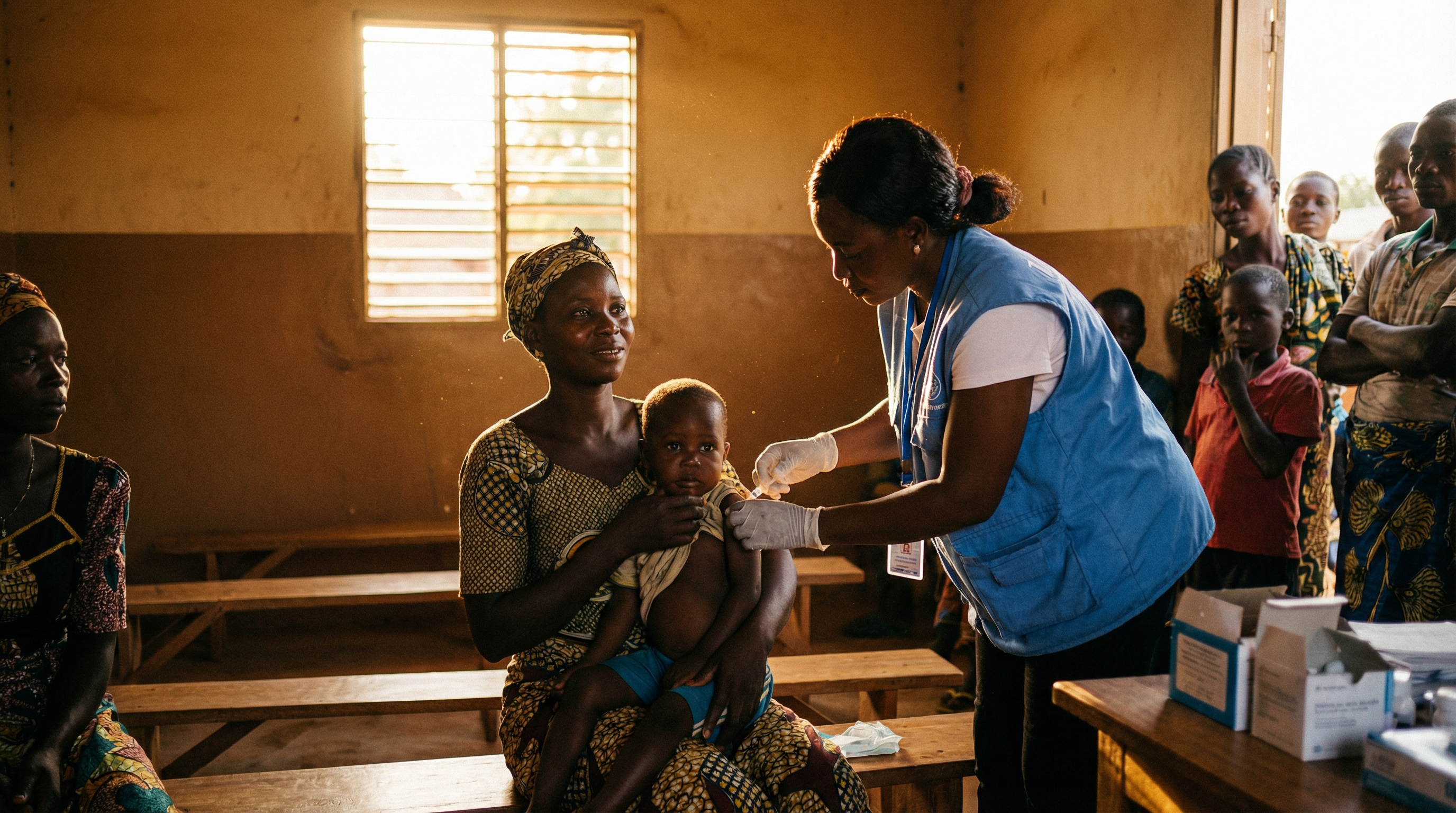
The potential impact is immense. By reducing the burden of morbidity and mortality linked to malaria, vaccination can free up considerable resources in health systems, reduce school and professional absenteeism, and contribute to the economic development of the most affected countries. Ghana's experience, one of the three pilot countries in the RTS,S vaccine implementation phase, offers valuable lessons. Facing challenges similar to those in Nigeria, Ghana has implemented innovative strategies to maximize the impact of vaccination. One notable success was the integration of the fourth dose of the malaria vaccine (the 18-month booster) with the second dose of the measles vaccine. This approach achieved 81% coverage for the fourth dose, demonstrating the effectiveness of integrating vaccination services [11]. Ghana has also focused on training health workers and on targeted communication campaigns to strengthen community trust, lessons from which Nigeria and other countries can draw inspiration for their own deployment programs.
Optimism must, however, remain lucid. Malaria remains a complex disease, and the parasite, like its vector, the mosquito, has a formidable capacity for adaptation. Climate change poses an additional threat, with the potential to expand malaria transmission zones. Rising temperatures and changing rainfall patterns could allow vector mosquitoes to survive and reproduce in previously unaffected regions, such as high-altitude areas in Africa or more temperate regions. The WHO has warned that climate change could lead to a significant increase in the number of people at risk of malaria in the coming decades [10]. The fight must therefore continue on all fronts: research and development of new tools (next-generation vaccines, treatments, insecticides), strengthening of health systems, and maintaining sustainable funding.
The battle is far from won. But the data from Kebbi shows that it is winnable. With the arrival of effective and affordable vaccines, humanity has a new powerful weapon to accelerate the march towards a malaria-free world.
---
Sources
- https://www.who.int/publications/i/item/9789240086173
- _blank
- noopener
- https://humanprogress.org/malaria-vaccine-reduces-deaths-of-children-in-northwestern-nigeria/
- _blank
- noopener
- Vaccine Reduces Child Malaria Deaths in Northwestern Nigeria.
- Efficacy and safety of RTS,S/AS01 malaria vaccine.
- Efficacy and immunogenicity of R21/Matrix-M vaccine.
- https://www.gavi.org/
- _blank
- noopener
- Gavi secures 600 million malaria vaccine doses.
- https://www.who.int/news-room/questions-and-answers/item/artemisinin-resistance
- _blank
- noopener
- https://doi.org/10.1186/1478-7547-5-6
- _blank
- noopener
- Alaba, O. A., & Alaba, O. B. (2009). Malaria in Rural Nigeria: Implications for the Millennium Development Goals. *African Development Review*, 21(1), 73-85.
- https://www.gavi.org/vaccineswork/heres-how-reducing-malaria-can-add-16-billion-africas-gdp-every-year
- _blank
- noopener
- https://www.who.int/news-room/questions-and-answers/item/malaria-and-climate-change
- _blank
- noopener
- Adeshina, O. O., et al. (2022). Barriers and facilitators to nationwide implementation of the malaria vaccine in Ghana. *Malaria Journal*, 21(1), 1-13.