Restoration of Prairie Ecosystems in the United States: 600,000 Hectares Protected by American Prairie and a Model That is Expanding
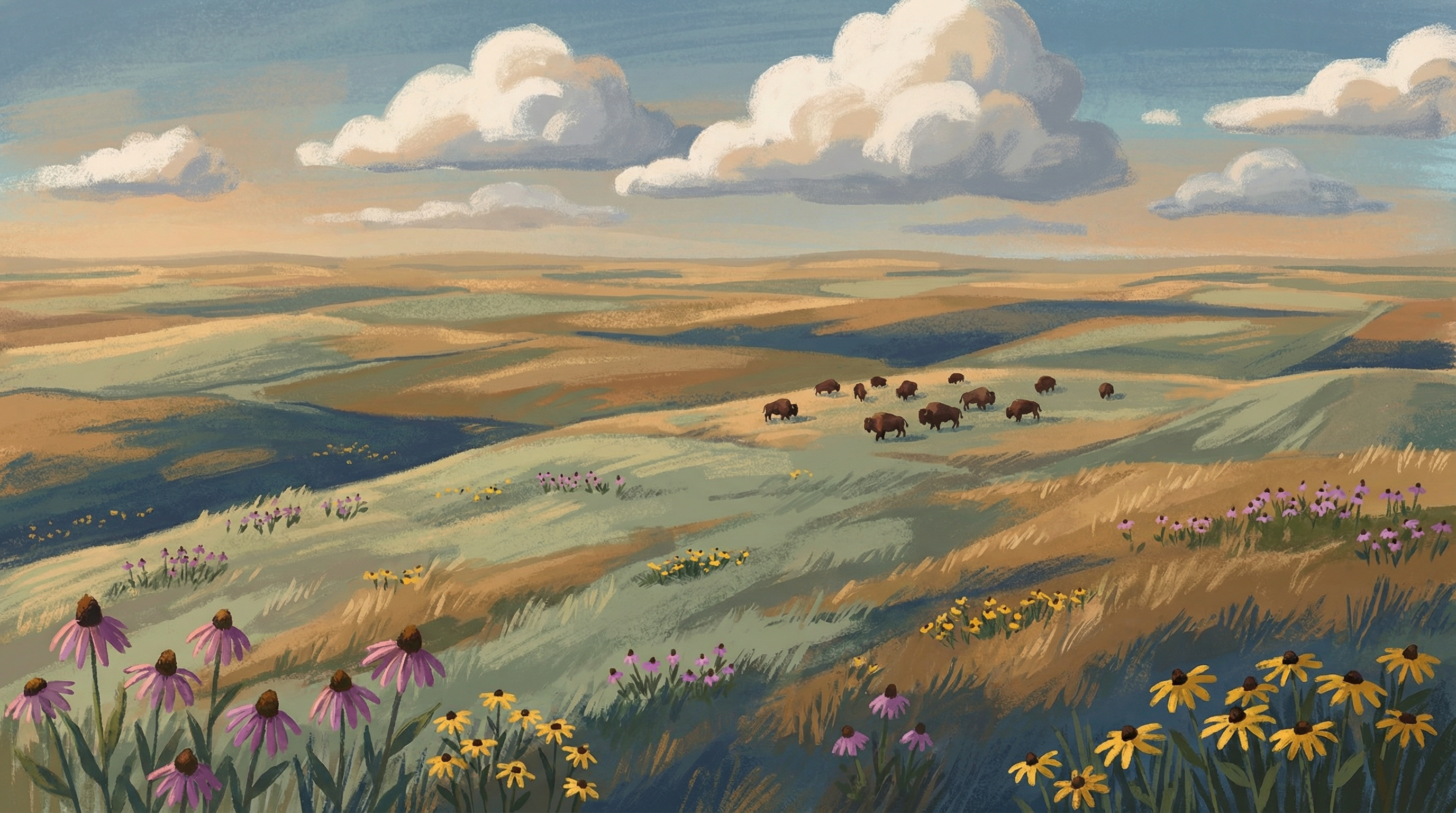
600,000 Hectares of Prairie Protected in Montana, 800 Bison Reintroduced
American Prairie, a non-profit organization founded in 2001, announced in January 2026 that it has crossed the threshold of 600,000 hectares (approximately 1.5 million acres) of protected prairie in north-central Montana. The long-term goal is to establish a contiguous reserve of over 1.3 million hectares – which would make it the largest restored prairie area in the world.
The project is based on an original model: the progressive acquisition of private ranches, combined with grazing agreements with neighboring ranchers and the reintroduction of wild bison. In 2025, American Prairie's bison herd numbered around 800 individuals, compared to about ten during the initial reintroductions in 2005.
Less Than 4% of Original North American Prairies Remain in a Natural State
Temperate grasslands are among the most threatened ecosystems on the planet. According to the IUCN, less than 4% of original North American prairies remain in a natural state – a rate of destruction higher than that of tropical forests. The American Great Plains, which once covered over 160 million hectares from Texas to Montana, have been converted to agricultural land by more than 70%.
Prairie restoration offers major ecological benefits. Prairie soils store carbon sustainably – up to 1.5 tons of CO2 per hectare per year according to some estimates. They filter water, prevent erosion, and support specific biodiversity (prairie dogs, black-footed ferrets, Gunnison's sage-grouse) that cannot survive in any other habitat.
The American Prairie model is being studied by similar organizations in Argentina (Rewilding Argentina), Russia (Pleistocene Park), and Europe (Rewilding Europe). The idea of restoring entire ecosystems rather than protecting isolated species is gaining traction in the scientific community.
Montana Ranchers View American Prairie as a Threat to Their Economy
The project is locally controversial. Many Montana ranchers see American Prairie as a threat to their way of life and their economy. Reintroduced bison can damage fences and compete with livestock for grazing. Some counties have passed symbolic resolutions against the project.
The land acquisition model also raises questions of equity. American Prairie buys ranches at market prices, but the concentration of land in the hands of a conservation organization – funded primarily by donors from the East Coast – is creating cultural tensions in a region attached to family ranching.
The 600,000 hectares protected represent less than half of the final objective. The pace of acquisition depends on voluntary ranch sales, making the timeline uncertain. And complete ecological restoration – the return of a functional prairie ecosystem with its full complement of wildlife – will take decades.
The project is real, ambitious, and scientifically grounded. But it also illustrates the tensions between conservation and local communities that permeate all major ecological restoration projects worldwide.