Renewables: First Source of Electricity in the European Union in 2025
Wind and Solar in the Lead
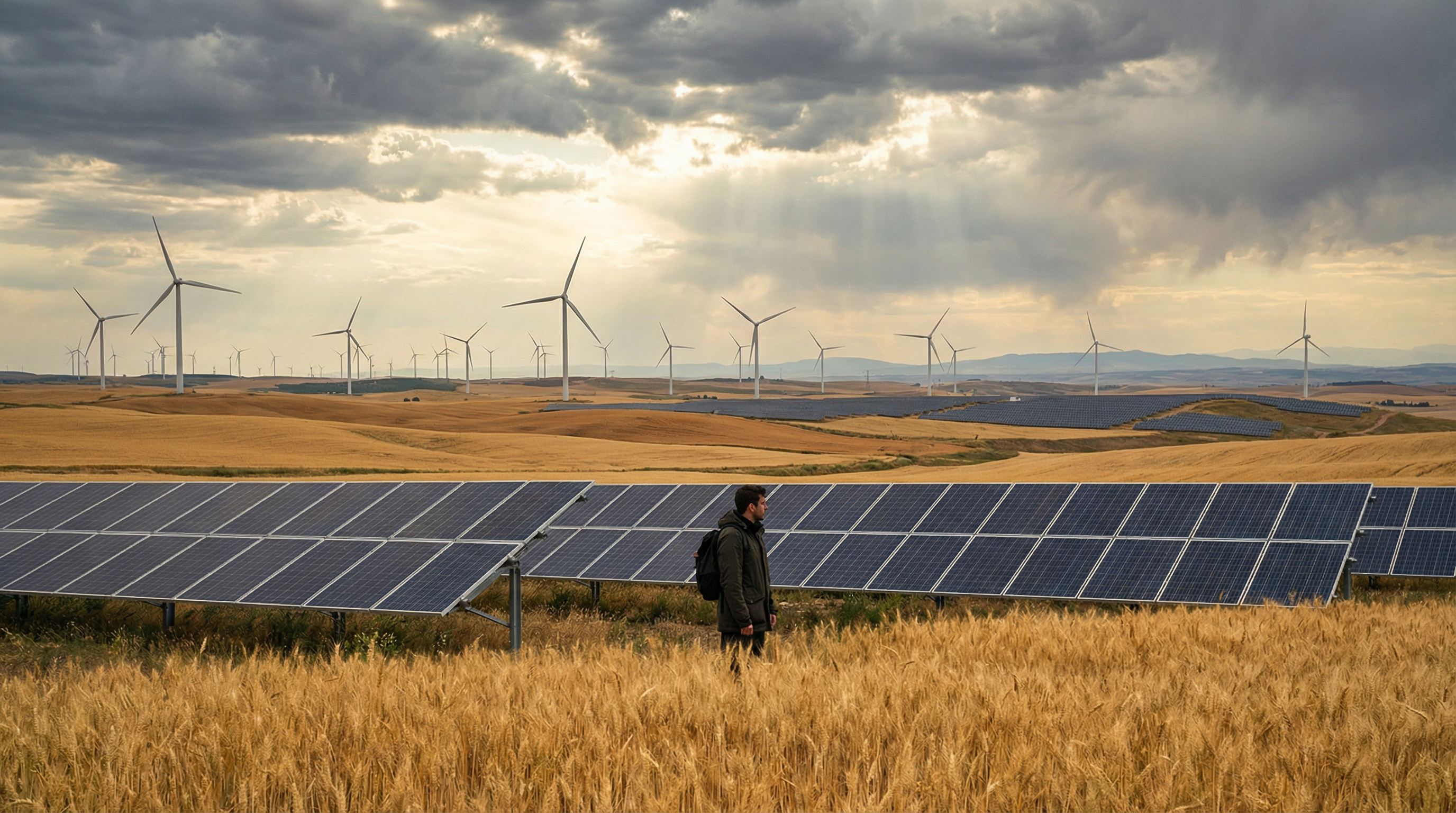
The combined production of wind and solar reached a new peak in 2025. These two sources now represent nearly a third of the EU's total electricity. In 2024, renewables as a whole (including hydropower and biomass) already accounted for 47.5% of gross electricity consumption, up 2.1 points from 2023.
This progress results from several factors. The continued decline in the cost of solar photovoltaics has made this technology competitive without subsidies in many regions. Investments in onshore and offshore wind have increased, driven by support policies and power purchase agreements (PPAs) signed by companies. The REPowerEU plan, launched in 2022 after Russia's invasion of Ukraine, accelerated the movement by setting more ambitious deployment targets.
---
Solar, the Main Growth Driver
Solar photovoltaics is the fastest-growing technology. Its production increased by 20.1% in 2025, for the fourth consecutive year. It now represents 13% of EU electricity, more than coal or hydropower taken separately. Five countries have exceeded the 20% solar electricity threshold: Hungary, Cyprus, Greece, Spain, and the Netherlands.
The decline in costs is a central factor. The price of solar panels has fallen by more than 80% in ten years. This trend makes solar competitive not only against coal and gas, but also against nuclear in many configurations. The speed of deployment is another advantage: a solar farm can be built in a few months, compared to several years for a thermal or nuclear plant.
---
Eleven Countries Above 50%
In 2024, eleven member states produced more than half of their electricity from renewable sources. This group includes Austria (90.1%), Sweden (88.1%), Denmark, Portugal, Spain, Croatia, Latvia, Finland, Germany, Greece, and the Netherlands.
At the other end of the spectrum, some countries remain dependent on fossil fuels. Poland, although making strong progress on solar, still produces a significant portion of its electricity from coal. The gaps between countries reflect different political choices and geographical conditions.
---
The REPowerEU Target: A 113 GW Gap
The EU has set a target of 1,236 GW of installed renewable capacity by 2030 under the REPowerEU plan. Current IEA forecasts estimate that capacity will reach 1,123 GW by that deadline, a deficit of 113 GW. The EU should nevertheless add more than 630 GW of renewable capacity between 2025 and 2030.
Several factors explain this potential gap. Authorization delays for projects, particularly for offshore wind, remain long. In some countries, obtaining a permit can take five to seven years.
---
Grid Integration and Storage
The rise of renewables raises technical questions. Wind and solar are intermittent sources: their production depends on wind and sunshine, not on demand. The EU installed 27.1 GWh of new battery capacity in 2025, an increase of 45% compared to 2024 and a twelfth consecutive annual record.
Coal, meanwhile, continues its decline. It now represents only 9.2% of EU electricity production in 2025, a historic low, whereas it provided nearly a quarter ten years ago. In 19 of the 27 member states, the share of coal is now zero or below 5%.
The 2025 data shows that the European energy transition is progressing. Solar and wind are now the EU's primary source of electricity. But the current pace is not sufficient to meet all the set targets. The trajectory is engaged. The question is whether it will be maintained and accelerated in the years to come.
Sources
- [1] Ember (2026). European Electricity Review 2026, ember-energy.org
- [2] IEA (2025). Renewables 2025: Analysis and forecasts to 2030, iea.org
- [3] Eurostat (2026). 2024: nearly 50% of EU electricity came from renewables, ec.europa.eu
- [4] SolarPower Europe (2026). EU Battery Storage Market Review 2025, solarpowereurope.org