Quantum Computing Emerges from the Labs: A Global Technological Acceleration
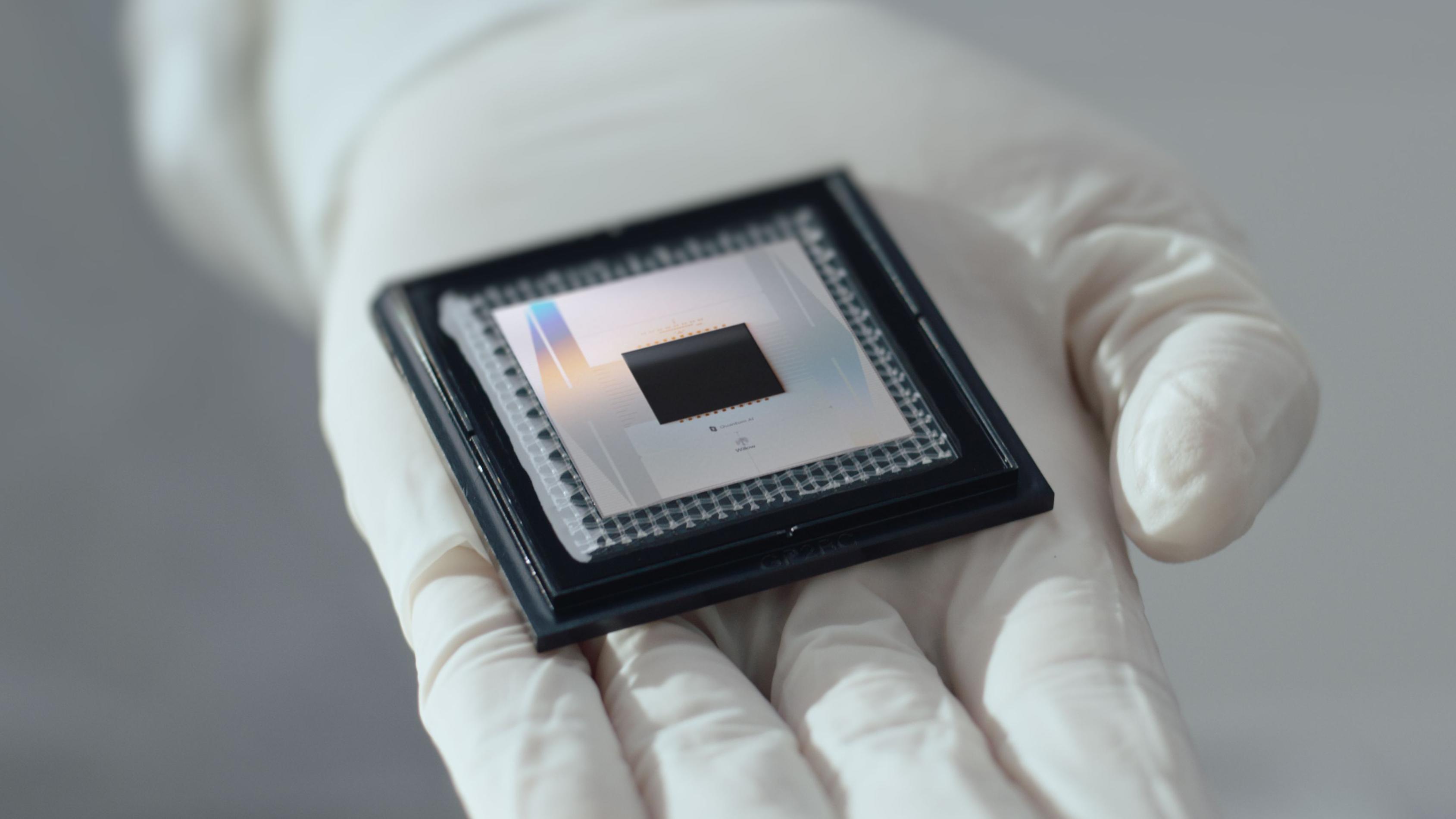
Long confined to academic publications and fundamental physics experiments, quantum computing is beginning to produce its first concrete results. In 2026, intense competition between technology giants, specialized startups, and state powers has led to significant advances in processor design and algorithm implementation. While the universal, fault-tolerant quantum computer remains a distant goal, current machines, though imperfect, are already finding applications in sectors as varied as pharmaceuticals, finance, and materials science, signaling a gradual transition from basic research to applied engineering.
The Race for Qubits: Competing Technological Approaches
The construction of a quantum computer relies on the ability to create and manipulate quantum bits, or qubits. Unlike the classical bit, which can only take the value 0 or 1, the qubit can exist in a superposition of both states simultaneously. This property, combined with entanglement, which links the fate of multiple qubits in a non-local way, is the source of the exponential computing power promised by quantum. Several technologies are competing to build the most powerful qubits, each with its own strengths and weaknesses.
Superconducting processors, adopted by players like Google, IBM, and Rigetti, are currently the most widespread. They consist of tiny circuits of niobium or aluminum cooled to temperatures close to absolute zero (around 15 millikelvins) for the material to become superconducting and minimize electrical disturbances. This technology allows for high-speed calculations, with gate operations measured in nanoseconds, but the sensitivity of qubits to their environment (thermal "noise," vibrations, electromagnetic fields) remains a major obstacle. Google has asserted its position with its Willow processor, demonstrating a computing capacity exceeding that of classical supercomputers for a specific task [1]. The company notably used Willow to implement a surface code, a method of quantum error correction, with 105 qubits, achieving a logical error rate of 0.143% per cycle [2]. For its part, IBM is pursuing an aggressive roadmap, with the 1,121-qubit Condor processor and the 133-qubit Heron, the latter offering a significant error reduction thanks to a new coupler architecture [3].
Another mature approach is that of trapped ions, championed by companies like IonQ and Honeywell (now Quantinuum). Here, atoms, such as ytterbium, are ionized (an electron is removed) and suspended in an electromagnetic field under vacuum. Lasers are then used to cool the ions and manipulate their quantum state. This method offers excellent stability and high fidelity of the qubits, which are almost perfectly identical and well isolated from the environment. However, operations are slower than on superconducting chips (on the order of a microsecond). IonQ's Forte system, with its 36 qubits, boasts very low gate error rates, which is an advantage for executing complex algorithms [4].
Photonics, which uses particles of light (photons) as qubits, represents a third promising path. PsiQuantum is the standard-bearer of this technology, with the extremely ambitious goal of building a fault-tolerant one-million-qubit computer by 2027 [6]. The potential advantage of photonics is its ability to operate at room temperature and to leverage the manufacturing infrastructure of the semiconductor industry. However, making photons interact in a controlled way to create two-qubit logic gates is a considerable technical difficulty, as photons interact very little with each other.
Industrial Applications Taking Shape
The technological effervescence around quantum is beginning to translate into concrete use cases, particularly in industries where the simulation of complex systems is a necessity. The pharmaceutical sector is one of the most promising. The design of new drugs relies on a fine understanding of molecular interactions, a simulation problem that quickly exceeds the capabilities of classical computers. Companies like AstraZeneca, Boehringer Ingelheim, and Amgen are exploring the use of quantum algorithms to simulate the behavior of complex molecules, such as proteins, to predict their affinity with a therapeutic target [8]. The precise simulation of molecular dynamics could significantly reduce the time and cost of developing new drugs, which currently amounts to billions of dollars and can take over a decade.
Finance is another area where optimization reigns. Portfolio management, risk assessment, and the pricing of derivatives are all problems that could benefit from quantum computing power. HSBC reported a 34% improvement in predicting bond transactions using quantum-enhanced machine learning models [9]. Similarly, asset manager Vanguard has collaborated with IBM to use the Heron processor for portfolio optimization tasks, demonstrating the potential of these new machines for large-scale financial problems [9]. Beyond optimization, quantum algorithms could accelerate Monte Carlo simulations, used extensively for risk assessment and the pricing of complex options.
In materials science, quantum computers are used to analyze the configuration of atoms and molecules. These simulations make it possible to predict the properties of new materials. For example, research has focused on calculating the energy of defective graphene structures, information useful for the design of new electronic components [10]. The ability to design materials in silico with specific properties could have repercussions in fields as varied as energy, with the development of better catalysts for green hydrogen production or more efficient batteries, and aeronautics, with the creation of lighter and more resistant alloys.
Intense Geopolitical and Financial Competition
The promise of a major technological breakthrough has triggered a global investment race. Governments, aware of the strategic implications of quantum computing, are deploying national plans with considerable budgets. China is leading this race with public investments estimated at over $15 billion, a significant portion of which is allocated to its National Laboratory for Quantum Information Sciences [11]. This proactive strategy is also evident in the space domain, with the Micius satellite dedicated to quantum communications, and on the industrial front, with players like Origin Quantum, which has developed a 72-qubit superconducting computer and filed over 200 patents [7]. The stated goal is to achieve complete technological autonomy in this sector deemed sovereign.
Faced with this offensive, the United States and Europe are not standing still. The American National Quantum Initiative Act, launched in 2018, has mobilized billions of dollars for research and development, coordinating the efforts of federal agencies (DOE, NSF, NIST), universities, and industry. In France, the national quantum plan, announced in 2021, is endowed with €1.8 billion over five years, with the objective of financing fundamental research, the development of prototypes, and the creation of a complete industrial ecosystem, from component manufacturing to software [1]. Similar initiatives exist in Germany (€2 billion), the United Kingdom, and the Netherlands, creating a landscape of competition but also collaboration within the Western bloc.
This dynamic of public investment is complemented by an influx of private capital. Technology giants (Google, IBM, Microsoft, Amazon) are investing massively internally, while venture capital funds are financing a dynamic ecosystem of startups like PsiQuantum, Rigetti, or Quantinuum. This dual source of funding is accelerating the pace of innovation and the transition from laboratory discoveries to marketable products. The stakes are high: the first nation or company to master large-scale quantum computing will have a considerable advantage in many areas, from national security, with the threat posed by Shor's algorithm to current cryptography, to economic competitiveness.
Technological and Scientific Hurdles to Overcome
Despite undeniable progress, the road to the universal quantum computer is still long and fraught with challenges. The main obstacle remains decoherence, a phenomenon by which qubits lose their quantum state upon contact with their environment, leading to calculation errors. Quantum error correction, which consists of using several physical qubits to encode a single, more robust logical qubit, is an active but resource-intensive area of research. It is estimated that it will take thousands, or even millions, of physical qubits to create a single logical qubit reliable enough for complex calculations.
Current machines, described as "noisy" (Noisy Intermediate-Scale Quantum or NISQ), are limited in the number of qubits and in fidelity. They can only execute shallow-depth algorithms and are incapable of factoring large numbers, the application that initially made quantum famous with Shor's algorithm. Nevertheless, these NISQ machines are proving useful for optimization and simulation problems where an approximate solution is acceptable. Research is focused on developing algorithms specifically designed to take advantage of these imperfect machines.
The software ecosystem is also beginning to take shape, with the development of programming languages (like IBM's Qiskit or Google's Cirq) and compilers that allow developers to abstract the complexity of quantum hardware. Cloud platforms like IBM Quantum Experience or Amazon Braket are democratizing access to these technologies and fostering the emergence of a community of researchers and engineers. Talent development is also a fundamental aspect of this new industry, which will require advanced skills at the intersection of physics, computer science, and engineering. Universities and companies are setting up training programs to prepare tomorrow's workforce for this announced transition.
The threat that quantum computing poses to current cryptography is taken very seriously. Shor's algorithm, if executed on a sufficiently powerful machine, could break the RSA and ECC encryption systems that currently protect almost all digital communications, from bank transactions to state secrets. This prospect prompted the US National Institute of Standards and Technology (NIST) to finalize its first post-quantum cryptography standards in 2024, after eight years of work. Three algorithms were selected: ML-KEM (formerly CRYSTALS-Kyber) for key exchange, and ML-DSA (CRYSTALS-Dilithium) and SLH-DSA (SPHINCS+) for digital signatures. The migration to these new standards is a considerable undertaking for companies and administrations, as it involves updating billions of devices and protocols. The "harvest now, decrypt later" risk—where malicious actors store encrypted data today to decrypt it later with a quantum computer—makes this transition urgent, even if the quantum computer capable of breaking RSA-2048 does not yet exist.
In 2026, quantum computing has definitively left the realm of pure speculation. The convergence of massive investments, hardware advances, and the emergence of concrete use cases is shaping the contours of a new computing era. While the most ambitious applications are slow to materialize, the momentum that has been set in motion is powerful enough to profoundly transform entire sectors of science and industry in the coming decade. The question is no longer whether the quantum computer will see the light of day, but rather when and in what form it will reach sufficient maturity to disrupt our world.
Sources
- [1] Tech Insider. Quantum computing in 2026, tech-insider.org
- [2] Nature. Google Willow quantum error correction, nature.com
- [3] IBM Newsroom. IBM Debuts Next-Generation Quantum Processor, newsroom.ibm.com
- [4] IonQ. Forte Quantum System, ionq.com
- [5] Rigetti. Multi-chip quantum computer, rigetti.com
- [6] IEEE Spectrum. PsiQuantum supercomputer, spectrum.ieee.org
- [7] Origin Quantum. originqc.com.cn
- [8] McKinsey. The quantum revolution in pharma, mckinsey.com
- [9] IBM. Quantum computing shows potential in finance, ibm.com
- [10] AIP. Quantum computing and materials science, pubs.aip.org
- [11] PatentPC. Government spending on quantum computing, patentpc.com