Oil Spills from Tankers Have Fallen by More Than 90% Since the 1970s
The Numbers: A Spectacular Reduction
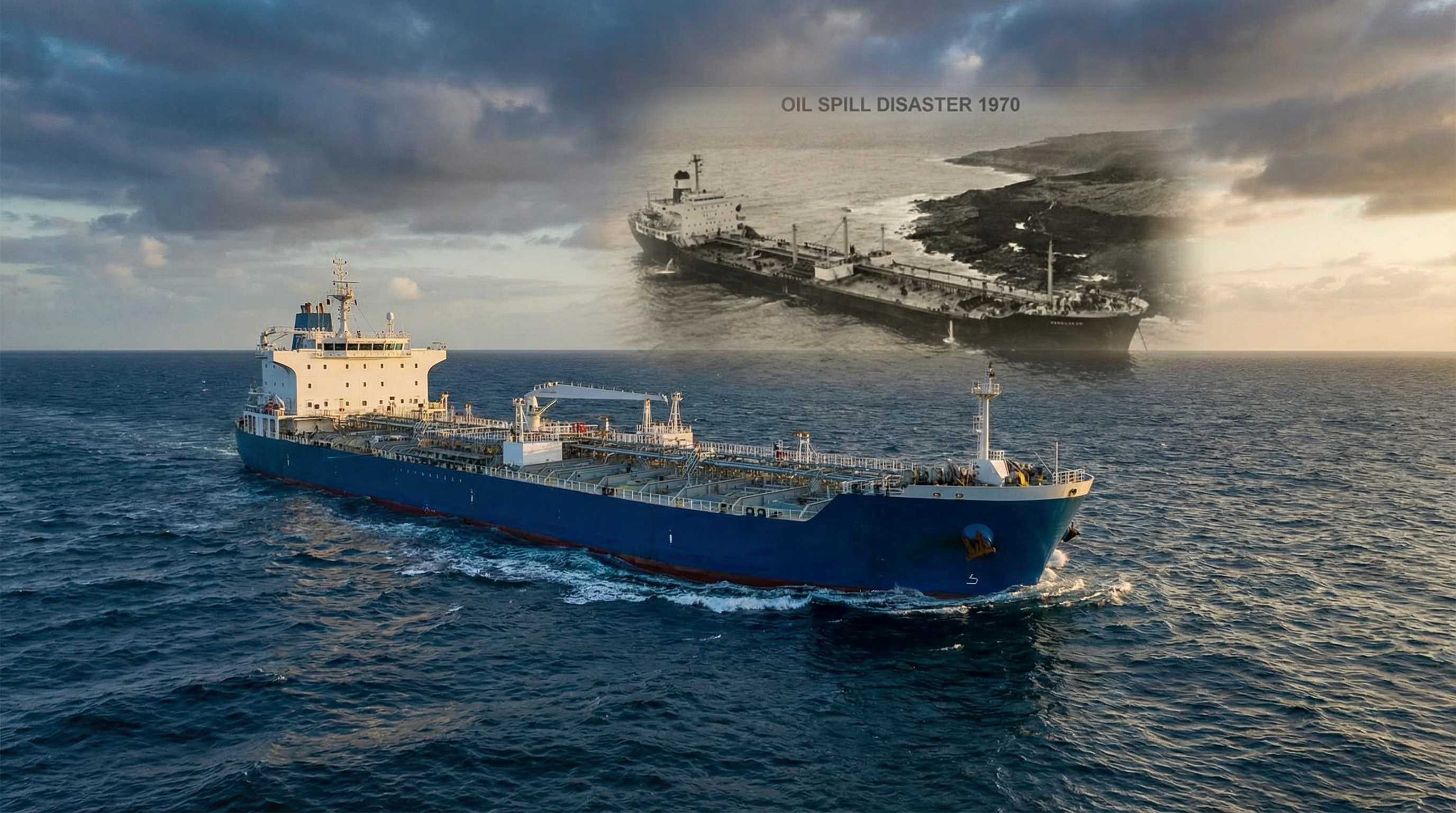
In the 1970s, tankers spilled an average of 24.5 major spills (more than 700 tonnes) per year into the oceans. In the 2010s, this figure had fallen to 1.8 per year. In 2025, the ITOPF (International Tanker Owners Pollution Federation) recorded only 2 major spills, for a total of less than 1,000 tonnes. This is a reduction of more than 99% in volume compared to the peak of the 1970s.
This evolution is one of the least known successes of international environmental regulation. It deserves to be documented, not to minimize the damage still caused by current spills, but to understand what worked and what could be applied to other areas.
---
The Central Role of the MARPOL Convention
The International Convention for the Prevention of Pollution from Ships (MARPOL), adopted in 1973 and entering into force in 1983, is the main regulatory instrument that enabled this reduction. It has been strengthened several times after major disasters: the Amoco Cadiz in 1978, the Exxon Valdez in 1989, the Prestige in 2002.
The requirement to build double-hull tankers, introduced progressively from 1992 and made mandatory for all vessels in service in 2010, is the measure that had the greatest impact. The double hull creates an additional barrier between the cargo and the water in the event of a collision or grounding. Statistics show that double-hull tankers spill on average 10 times less oil than single-hull vessels during an incident.
---
Control Mechanisms
The MARPOL convention also introduced control and sanction mechanisms. Port states can inspect foreign vessels and detain them if they do not comply with standards. This possibility of inspection and detention created a strong incentive for shipowners to comply with the rules.
Satellite surveillance systems have considerably improved the detection of illegal discharges. Artificial intelligence algorithms now analyze radar images from satellites to detect oil slicks at sea, even at night or in bad weather. These tools make it possible to identify the responsible vessels and prosecute them.
---
Limits and Remaining Challenges
Despite these advances, maritime pollution by hydrocarbons has not disappeared. Chronic spills, caused by illegal discharges of ballast water and fuel residues, represent a total volume greater than accidental spills. These discharges are difficult to detect and sanction.
Offshore platforms represent another source of pollution. The Deepwater Horizon disaster in 2010, which spilled 4.9 million barrels of oil into the Gulf of Mexico, showed that the risks associated with offshore exploitation remain significant.
The trajectory of oil spills from tankers is a case study for international environmental regulation. It shows that measurable results can be achieved over several decades, provided that standards are strengthened after each major incident and that control mechanisms are effectively implemented.