Mosquitoes for Animal Vaccination
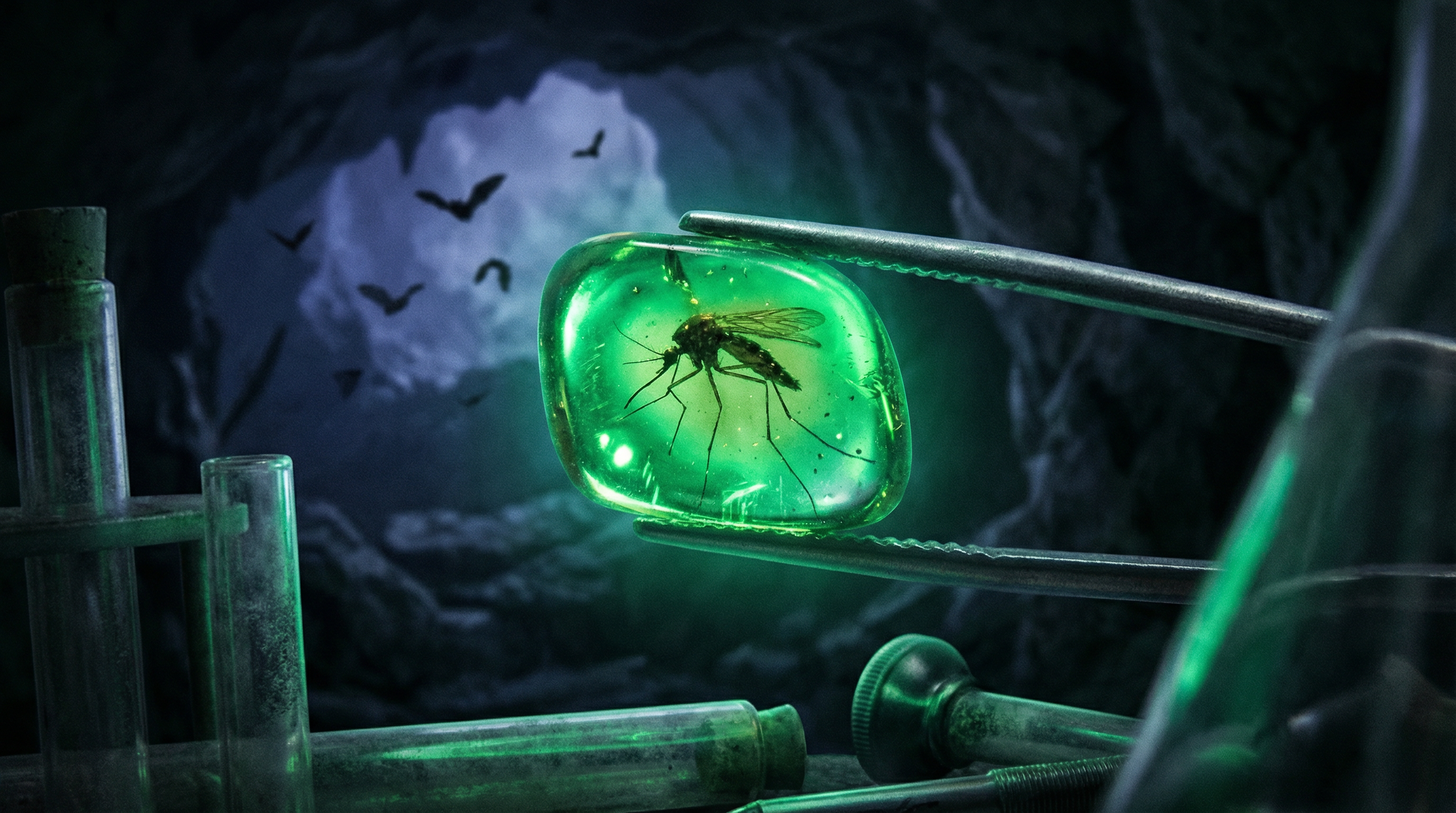
Researchers at the Wuhan Institute of Virology published a method in March 2026 in Science Advances to vaccinate wild bats without capturing them: using sterilized Aedes aegypti mosquitoes as vectors for a recombinant vaccine. In laboratory conditions, mice and bats exposed to bites from these mosquitoes developed neutralizing antibodies against rabies and the Nipah virus. This is the first demonstration of its kind in an animal model.
Bats: Persistent Reservoirs of Zoonotic Viruses
Bats represent approximately 22% of mammalian species. Their immune system allows them to harbor viruses without developing severe symptoms. They are natural reservoirs for coronaviruses (SARS, MERS, COVID-19), filoviruses (Ebola), the rabies virus, and the Nipah virus. The latter has a human mortality rate of up to 75%. Rabies, once neurological symptoms appear, is fatal in nearly 100% of cases.
Vaccinating these animals in the wild has so far been impossible at scale. They live in caves or dense forests, form colonies of several million individuals, and travel long distances. Intramuscular injections and oral baits, effective for foxes or raccoons, do not work for bats. Selective culling campaigns conducted in Latin America against rabies had the opposite effect: by dispersing infected individuals, they worsened transmission.
---
The Protocol: Sterilized Mosquitoes Carrying a Recombinant VSV Vaccine
The researchers built a vaccine from vesicular stomatitis virus (VSV), an arbovirus capable of infecting both insects and mammals. They inserted the gene for the glycoprotein G of the rabies virus into the VSV genome to create rVSV-RABV. An analogous version was constructed for the Nipah virus.
Male and female Aedes aegypti mosquitoes were sterilized by X-ray irradiation at 40 Gray. Sterilization prevents any reproduction after a potential release into the natural environment. These sterile mosquitoes were then fed a blood meal containing the rVSV-RABV vaccine. Twelve days later, the concentration of the vaccine virus in their salivary glands reached 3 × 10⁵ focus-forming units (FFU) per milliliter.
---
The Results: Antibodies Above the WHO Threshold
Mice exposed to bites from vaccine-carrying mosquitoes developed neutralizing antibody titers against rabies of 4.6 and 6.8 IU/ml. The WHO-defined protection threshold is 0.5 IU/ml. Vaccinated animals survived subsequent exposure to the rabies virus. Comparable results were obtained for the Nipah virus.
The researchers also tested a complementary method: saline traps containing the oral vaccine. Bats, which have a physiological need for minerals, naturally approach these traps and self-vaccinate by licking the salt block. Under conditions simulating a natural environment, cohabitation with vaccine-carrying mosquitoes triggered measurable immune responses in captive bats.
---
What the Study Does Not Yet Prove
The study remains entirely in the laboratory. No trials in natural settings have been conducted. Several experts cited by Nature raise practical and ethical questions.
Producing millions of sterile mosquitoes, infecting them in a controlled manner with a vaccine, transporting them, and releasing them into remote habitats represents an unresolved logistical and financial challenge. Monitoring immunity in wild bat populations would require tracking systems that do not yet exist at this scale.
On the regulatory side, intentionally releasing organisms carrying a vaccine agent into the environment is not authorized in any country without prior risk assessment. The question of possible recombination of the vaccine virus with other viruses present in nature remains open.
---
Two Viruses, One Common Logic
The choice of rabies and Nipah is not arbitrary. These are two viruses for which bats constitute a permanent reservoir, with current methods unable to reduce that reservoir at the source.
Rabies circulates endemically in many bat populations worldwide, despite the successes of 20th-century vaccination campaigns in terrestrial carnivores. Nipah is transmitted to humans primarily via date palm sap contaminated by the urine or saliva of Pteropus bats, or via livestock such as pigs that serve as intermediate hosts. In Bangladesh and India, human Nipah outbreaks occur regularly.
The approach described in Science Advances aims to act upstream of these transmission chains, by reducing viral prevalence in the animal reservoir itself.
---
So What?
The study demonstrates the biological feasibility of the concept in the laboratory. The recombinant VSV vaccine replicates in the salivary glands of Aedes aegypti and confers measurable protection in rodents and bats. This is a solid result for a first publication.
The distance between this result and a real-world application remains considerable. The logistical, regulatory, and ethical obstacles are real. But the method opens a concrete avenue for vaccinating wild species that were until now beyond the reach of available tools.
Sources
- [1] Li, H., et al. (2026). Ecological vaccination: A strategy to prevent zoonotic spillover from bats. Science Advances, 12(11). science.org
- [2] Nature News (2026, March 11). Using mosquitoes to vaccinate bats could curb the spread of deadly diseases. nature.com
- [3] UNMC Global Center for Health Security (2026, March 11). Using mosquitoes to vaccinate bats could curb the spread of deadly diseases. unmc.edu
- [4] WHO (2026). Nipah virus. who.int