Mental Health: A Billion People, 2% of Budgets

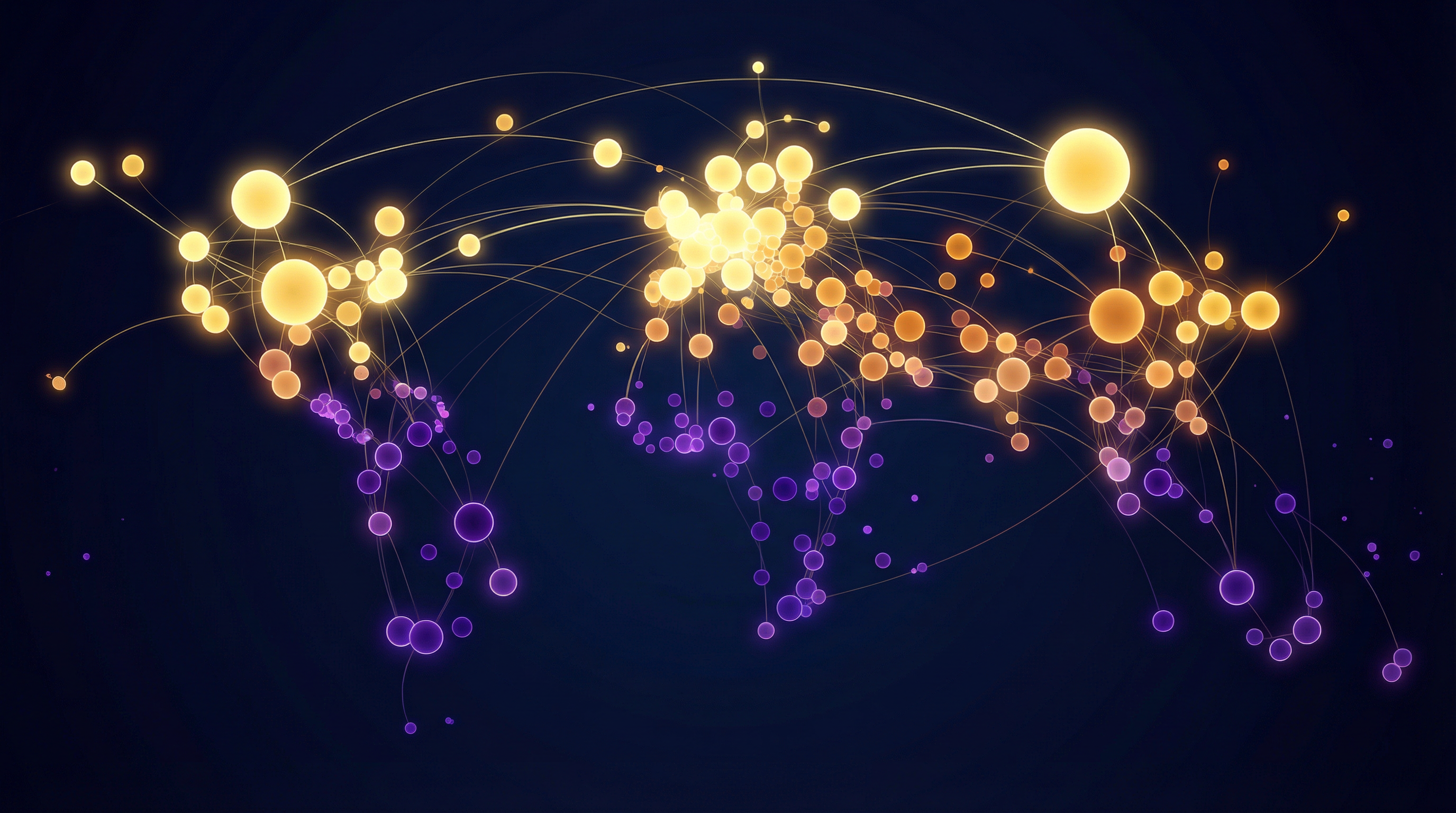
One billion people are living with a mental disorder, yet allocated health budgets barely exceed an average of 2%. This chronic underinvestment creates a gaping treatment gap, particularly in low-income countries where 75% of people receive no treatment at all. In response, local initiatives and research are exploring new paths, while the COVID-19 pandemic has left a lasting mark on global psychological well-being.
A Silent Global Burden
Psychological health is one of the most critical yet least visible dimensions of contemporary public health. According to the latest data from the World Health Organization (WHO) for 2024, more than a billion individuals worldwide are directly affected by a mental disorder. This figure, representing nearly one in eight people, covers a wide range of conditions, with anxiety and depressive disorders being the most prevalent. Far from being a mere statistical abstraction, this reality translates into profound human and economic consequences. Mental disorders are now the second leading cause of long-term disability globally, hindering the ability of millions to lead full and productive lives. The associated economic cost is just as significant. The WHO estimates that the loss of productivity directly attributable to depression and anxiety amounts to about $1 trillion each year for the global economy. This estimate only accounts for productivity losses, without including direct healthcare costs or the social impact on families and communities, suggesting that the real economic burden is likely much higher. The classification of these disorders, as detailed in reference publications like The Lancet, shows the complexity and diversity of conditions affecting mental health. These classifications, such as the DSM-5 or ICD-11, attempt to categorize deeply human suffering, ranging from specific phobias to complex psychotic disorders, including mood and eating disorders. This inherent complexity makes diagnosis and management particularly challenging and underscores the need for an approach that is both scientific and deeply human to understand and address this global phenomenon. The burden is not only economic or medical; it is, above all, human, measured in diminished lives, unrealized potential, and silent suffering that spreads within families and communities.
The Great Treatment Gap
One of the most striking paradoxes in global health is the abysmal gap between the need for mental health care and the resources actually allocated to it. Data from the WHO and global mental health surveys, such as those published in JAMA, paint a map of inequality in access to care. The most striking figure is undoubtedly that of low-income countries, where an estimated 75% of people with mental disorders receive absolutely no treatment. This "treatment gap" is not exclusive to developing countries, although it is most pronounced there. In many high-income countries, access to care remains a path fraught with obstacles, marked by long waiting lists, prohibitive costs for non-reimbursed therapies, and social stigma that, although diminishing, remains a major barrier to seeking help. The geography of access is also a determining factor, with a concentration of specialists in large urban centers, leaving vast territories in a state of psychiatric medical desert. This situation is exacerbated by a resource allocation that often favors hospital care and pharmacological interventions over preventive, community-based, and psychotherapeutic approaches, which are fundamental for comprehensive and sustainable care.
This situation is the direct consequence of chronic and systemic underinvestment. On average, nations devote only 2% of their overall health budget to mental health. This figure masks even deeper disparities: in low-income countries, this share drops to less than 1%. The comparison of per capita spending is even more telling: while a high-income country may invest up to $65 per person per year in mental health, this figure plummets to just $0.04 in the poorest countries. This financial imbalance inevitably affects infrastructure and human resources. The shortage of qualified professionals is a global constant. The global median is 13 mental health professionals per 100,000 inhabitants, a figure already insufficient, but which hides situations of extreme scarcity in large parts of the world, particularly in Africa and Southeast Asia, where this ratio can be less than 1 per 100,000.
Inspiring Local Responses
Faced with the scale of the treatment gap and the shortage of specialists, innovative solutions are emerging at the community level, demonstrating that it is possible to provide effective psychological support with limited resources. The "Friendship Bench" initiative, born in Zimbabwe, has become a model of its kind, studied and replicated internationally. The concept is disarmingly simple: train community health workers, often older and respected women in their community ("grandmothers"), to offer listening and first-line psychological support. These conversations take place informally, on a simple wooden bench in a public place. This approach destigmatizes the process of seeking care and makes it extremely accessible. Based on evidence, the program has demonstrated remarkable effectiveness in reducing symptoms of anxiety and depression among participants, offering a pragmatic alternative where psychiatrists and psychologists are almost non-existent.
In another context, India is tackling the problem on a different scale, but with the same desire to integrate mental health into the core of the healthcare system. The National Institute of Mental Health and Neurosciences (NIMHANS) in Bangalore is a pioneering institution that combines cutting-edge research, training, and the development of community mental health programs. One of NIMHANS's strategic objectives is to decentralize mental health care by integrating it into primary health care. This involves training general practitioners and non-specialized health personnel in the detection and management of common mental disorders. By acting on training, research, and public health policy, NIMHANS plays a leading role in the attempt to structure a national response to an immense need, in a country of more than a billion inhabitants. These two examples, although very different in their scale and approach, share a common philosophy: the decentralization of care, the empowerment of local communities, and the integration of mental health into broader, less stigmatizing care frameworks. They represent laboratories of social and health innovation, whose lessons could be adapted and applied in many other contexts, including in high-income countries seeking to make their mental health systems more accessible and equitable.
A Profitable Investment for the Future
The underinvestment in mental health is not just a moral failure; it is also an economic mistake. The $1 trillion in annual productivity loss is just the tip of the iceberg. Added to this are the direct costs of care for physical comorbidities, often aggravated by untreated mental disorders, as well as the social costs related to exclusion, crime, and the breakdown of family ties. Conversely, every dollar invested in the treatment of common mental disorders like depression and anxiety generates a return on investment of $4 in improved health and productivity. This increasingly documented economic argument is beginning to resonate with policymakers and international financial institutions. The World Bank, for example, is actively promoting the idea that investing in mental health is not only a health obligation but also a smart economic development strategy. For companies, investing in the mental well-being of their employees is no longer an option, but a necessity to attract and retain talent, reduce absenteeism, and stimulate innovation. The transition to an economy that values human capital in all its dimensions, including psychological, is a condition for sustainable and equitable growth in the 21st century. The real difficulty is to translate this growing recognition into concrete budgetary allocations and ambitious public policies that match the scale of the need.
The Long Shadow of the Pandemic
The global health crisis triggered by the COVID-19 pandemic acted as a powerful catalyst, exacerbating the pre-existing fragilities of mental health systems and sharply increasing the population's needs. In the first year of the pandemic alone, the WHO recorded a 25% increase in the global prevalence of anxiety and depressive disorders. This rapid rise is explained by a convergence of stressors: fear of infection, grief, social isolation imposed by lockdowns, economic uncertainty, and disruptions to daily life. Mental health services, already underfunded and under-capacitated, were quickly overwhelmed, struggling to respond to this new wave of psychological distress.
Beyond the immediate psychological impact of the crisis, a new concern has emerged with the phenomenon of "long COVID." Many patients, months or even years after their initial infection, continue to present a set of persistent neuropsychiatric symptoms. These symptoms include debilitating chronic fatigue, sleep disorders, persistent anxiety and depression, and cognitive difficulties often described as "brain fog." This new clinical reality underscores the deep interconnection between physical and mental health. It requires health systems to rethink post-infection care, systematically integrating psychological and psychiatric evaluation and follow-up. The long shadow of the pandemic on global mental health will require sustained investment and policy attention for years to come, to address its lasting consequences and strengthen the resilience of health systems against future crises. This involves not only increasing budgets but also rethinking the organization of care to create more integrated, preventive, and community-based systems. The challenge is to transform the collective awareness of the importance of mental health, brutally highlighted by the pandemic, into concrete and sustainable political and budgetary action. Without a fundamental rebalancing of public health priorities, the treatment gap will continue to widen, leaving millions of people without the support they need to live healthy and fulfilling lives.
Sources
- [1] WHO. More than a billion people have mental health problems, who.int
- [2] WHO. COVID-19 pandemic triggers 25% increase in anxiety and depression, who.int
- [3] The Lancet. Classification of mental disorders, thelancet.com
- [4] Friendship Bench. friendshipbench.org
- [5] NIMHANS. nimhans.ac.in
- [6] JAMA. Prevalence of mental disorders in the World Mental Health Surveys, jamanetwork.com