AI and Employment: Two March 2026 Studies Reveal -13% of Automatable Job Postings and +20% of Augmented Roles
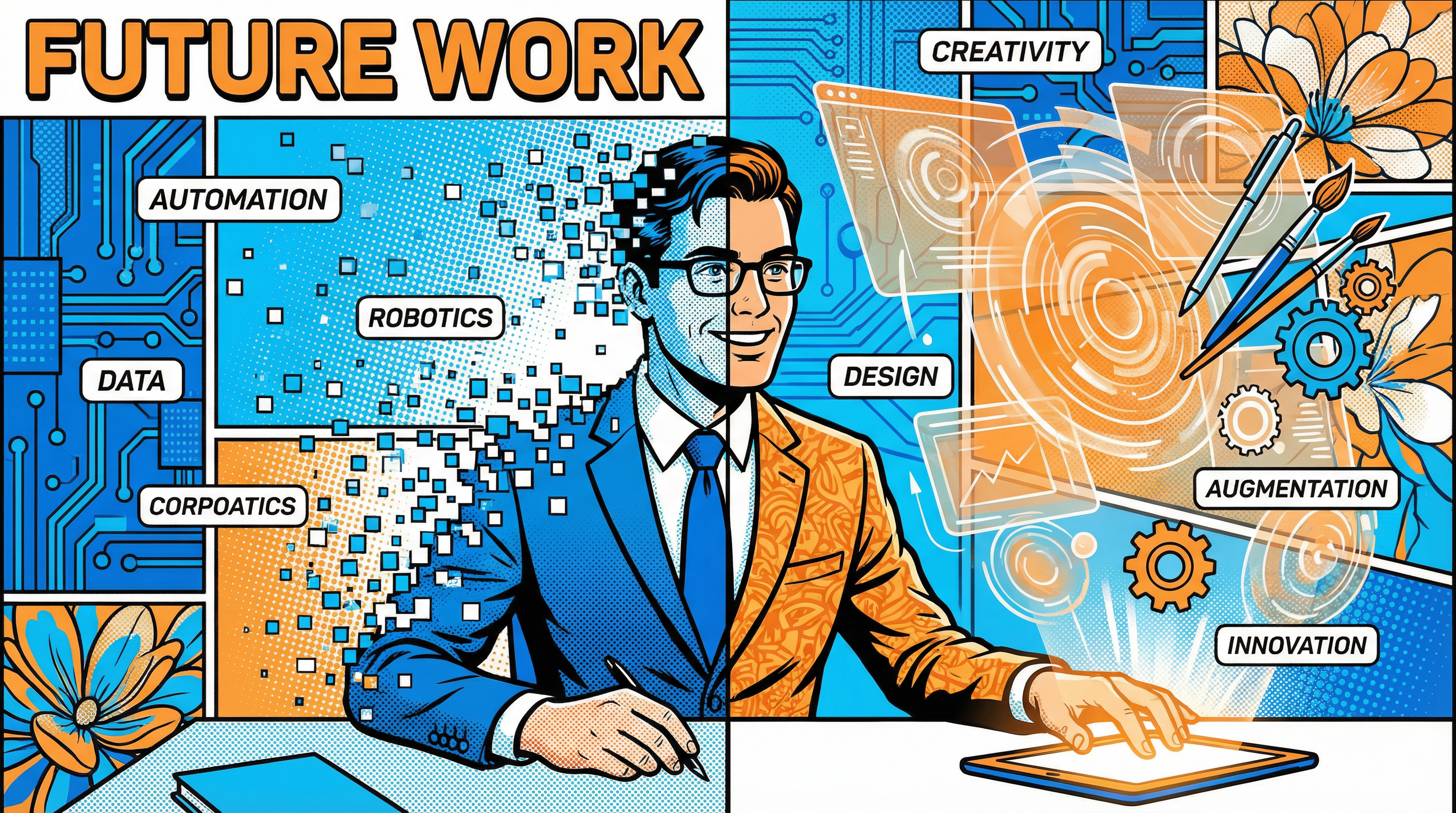
Is AI destroying jobs? Two studies published in March 2026—one by Harvard Business School, the other by Anthropic—provide the first solid empirical data. And the answer is more nuanced than public debate suggests.
The Harvard Business School Study: Job Postings as a Mirror
The Harvard Business School study, published on March 4, 2026, analyzes 55 million job postings in the United States between 2018 and 2025. The methodology is rigorous: researchers classified each posting according to its degree of exposure to AI automation, using the U.S. Department of Labor's O*NET framework.
The results show recomposition, not destruction. Postings for "highly automatable" positions decreased by 13% between 2023 and 2025. However, during the same period, postings for "AI-augmented" positions—those explicitly integrating AI skills into their descriptions—increased by 20%.
White-collar jobs are the most exposed. The sectors most affected by the decline in automatable postings are finance, law, accounting, and marketing. Roles in writing, basic data analysis, and customer support are showing a marked decline. Yet, these same sectors are seeing the emergence of new roles: "prompt engineer," "AI operations manager," "human-AI collaboration specialist."
The Anthropic Study: What Users Actually Do with AI
Anthropic's study, published on March 6, 2026, adopts a complementary approach. Instead of analyzing job postings, it examines the actual uses of Claude (Anthropic's AI model) by 1 million professional users over a 6-month period.
The results reveal that 67% of professional AI uses fall under "augmentation"—AI helps humans do what they were already doing, better or faster. Only 23% of uses fall under "automation"—AI replaces a human task. The remaining 10% are "exploratory" uses with no direct impact on productivity.
The Geography of Recomposition
Recomposition is not geographically uniform. Tech metropolises (San Francisco, New York, London, Paris) concentrate both job destruction and creation. Rural areas and mid-sized cities, less exposed to automatable office jobs, are paradoxically less affected in the short term.
What the Data Doesn't Say Yet
These two studies are the first to provide large-scale empirical data on the impact of AI on employment. However, they have significant limitations. They primarily cover the United States and English-speaking countries. The impact on emerging economies—where AI could bypass entire stages of economic development—remains largely undocumented.
The question of the quality of jobs created is also open. Are the new "AI-augmented" roles as well-compensated as the positions they replace? Initial data suggests yes, on average—but with much higher variance. "Super-users" of AI see their productivity and compensation increase significantly, while those who do not master the tools risk downward mobility.
Recomposition is real. But it is neither automatic nor equitable. It will depend on training policies, labor market regulation, and the capacity of institutions to support an accelerating transition.