China's 15th Five-Year Plan: Climate Constraints and Green Tech Dominance
A Plan Under Economic Constraint
China's 15th Five-Year Plan, unveiled on March 5, 2026, sets a 17% carbon intensity reduction for 2026–2030. This target, below initial climate commitments, coexists with growing global dominance in green technologies.
Economic Priorities Shape Climate Ambition
The plan reflects a careful balancing act between economic growth targets (around 5% GDP growth) and environmental commitments. The 17% carbon intensity reduction falls short of what climate scientists say is needed to align with Paris Agreement goals, but it comes alongside massive investments in solar, wind, and battery manufacturing.
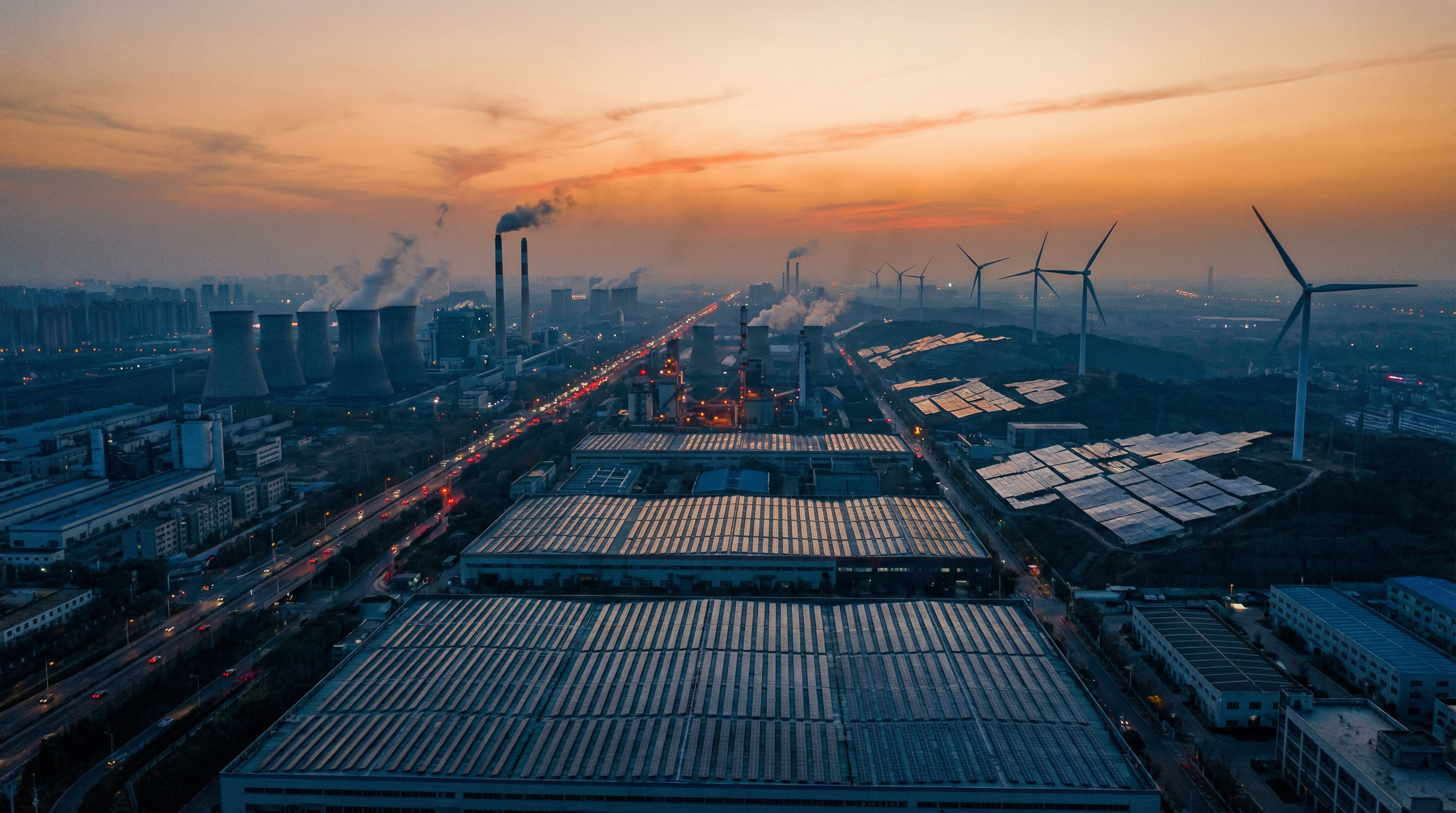
China currently produces 80% of the world's solar panels, 60% of wind turbines, and over 75% of lithium-ion batteries. These industries are explicitly prioritized in the new plan, with subsidies and export incentives that will further drive down global costs.
The Gap Between Targets and Science
The 14th Five-Year Plan (2021–2025) set an 18% carbon intensity reduction target. China missed it by 6 points, achieving only 12%. The new 17% target is therefore more modest—a recognition that economic pressures, particularly the ongoing real estate crisis, have constrained decarbonization in heavy industry.
The cement and construction sector, which accounts for roughly 15% of China's emissions, contracted sharply during the real estate downturn. This created an artificial emissions reduction that may reverse as the sector stabilizes.
Green Technology Export as Strategic Priority
Where the plan is ambitious is in green technology manufacturing and export. China aims to maintain and extend its lead in solar, wind, batteries, and electric vehicles. The plan explicitly targets "green development" as a driver of economic growth—positioning clean technology not as a cost but as a competitive advantage.
For the rest of the world, this has contradictory implications. Chinese manufacturing has made solar and wind power cheaper globally, accelerating the energy transition in developing countries. But it also creates trade tensions, as Western governments impose tariffs on Chinese green tech imports.
What This Means for Global Climate
China's 15th Five-Year Plan is neither a climate breakthrough nor a failure. It reflects the constraints of governing a 1.4-billion-person economy through a period of economic uncertainty. The carbon intensity target is modest; the green technology investments are substantial.
The plan's significance lies less in its climate targets than in its industrial strategy: China is betting that clean technology will be the dominant economic sector of the 21st century, and is positioning itself to lead it.