Kenya's National Census Confirms Decline in Poaching: 2,102 Rhinos and 41,952 Elephants, Figures Up Since 2021
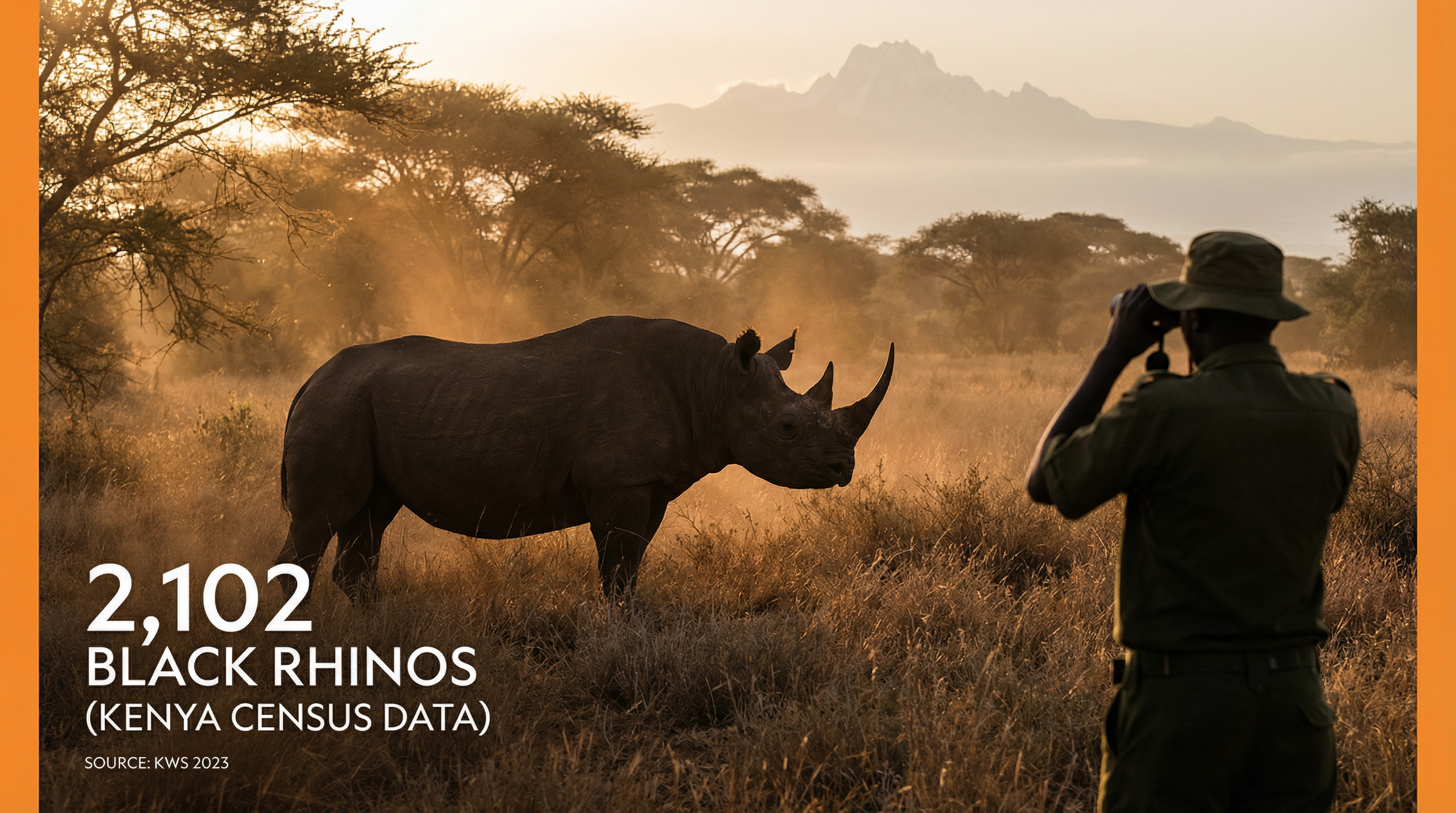
2,102 Rhinos and 41,952 Elephants Counted in Kenya in 2024
The Kenya Wildlife Service (KWS) published the results of the 2025 national wildlife census in February 2026. The figures confirm an encouraging trend: the country now has 2,102 rhinos (black and white combined), an increase of approximately 12% compared to the last count in 2021. The elephant population has reached 41,952 individuals, a 5% increase over the same period.
These results extend a dynamic that began in the mid-2010s, when Kenya tightened its anti-poaching legislation and invested heavily in technological surveillance of its parks and reserves.
Kenya Invests $200 Million Annually in Conservation
Kenya is one of the few African countries spared from the industrial poaching of the 2000s-2015 period. Between 2007 and 2013, the country lost an average of 50 to 60 rhinos per year—a rate that threatened the local extinction of the East African black rhino species. The turnaround is spectacular: in 2024, the KWS recorded only 3 poached rhinos nationwide.
Several factors explain this decline. Kenya's 2013 Wildlife Protection Act increased maximum penalties for poaching to 20 years in prison and a $200,000 fine. The deployment of surveillance technologies—drones, GPS collars, infrared cameras—has enabled faster detection. Community conservation programs, which involve local populations in tourism revenue, have reduced economic incentives for poaching.
The Kenyan model is now being studied by other countries in the region. Tanzania and Mozambique, facing similar challenges, sent delegations to the KWS in 2025 to draw inspiration from its methods.
Populations Remain Fragmented, and Poaching Persists in Other Countries
The KWS figures for Kenya should not obscure the overall situation. Across the African continent, poaching remains a serious threat. South Africa, home to about 80% of the world's white rhinos, still lost 499 rhinos in 2023, according to the South African Department of Environment—a decrease from the peak of 1,215 in 2014, but still a concerning number.
Kenya's success relies partly on the relatively manageable size of its protected territory and on investments that not all countries can afford. The KWS's annual budget exceeds $100 million, largely funded by tourism revenue. Landlocked or conflict-ridden countries do not have this resource.
Furthermore, the increase in elephant populations is creating new tensions. Human-elephant conflicts (crop destruction, property damage) are on the rise in areas bordering parks. The KWS acknowledges that managing coexistence is the next major challenge.
Poaching is declining in Kenya, and this is a verifiable fact. However, the model is not yet transferable to the continental scale, and conservation success creates its own management challenges.